
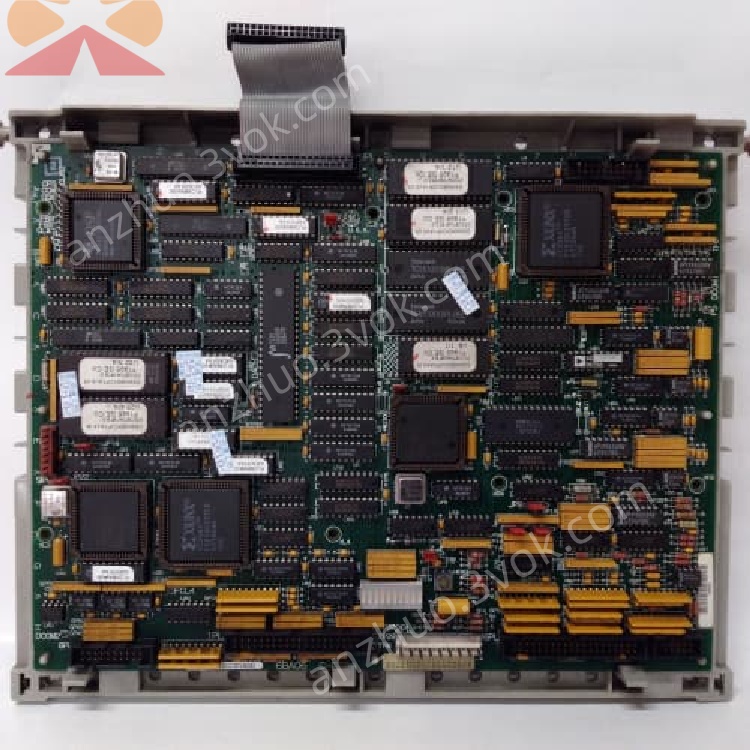
DS200SDCCG1AGD DS215SDCCG1AZZ01B
Description
1. Basic Information
Models: DS200SDCCG1AGD (Base Version), DS215SDCCG1AZZ01B (With Pre-installed Firmware/Version)
Brand/Series: General Electric (GE) Speedtronic Mark V Gas/Steam Turbine Control System, DS200/DS215 Series Drive Control Card (SDCC)
Standard: Manufactured per manual GEI‑100029, compatible with GE AC2000, DC2000, and EX2000 drive/exciter systems
Core Role: Key drive control unit for Mark V system, responsible for drive/exciter control, I/O signal conversion, real-time computation, system diagnosis, and parameter tuning
2. Core Hardware & Specifications
Processor Architecture: Onboard 3 sets of 16-bit microprocessors (including 80C196 MCU and TMS320C25 DSP), operating collaboratively via dual-ported RAM for independent task execution and fast response
Power & Electrical: 24VDC standard input, power consumption ≤20W; PCB with conformal coating for EMI resistance and vibration tolerance, suitable for industrial field environments
I/O & Interfaces: Multi-channel analog/digital I/O for sensor, encoder, and actuator signal access; RS‑232/RS‑485 communication interfaces for data exchange between system modules and host computers
HMI & Diagnosis: Onboard 10 LED indicators for real-time status and fault code display, enabling on-site quick troubleshooting; field-reprogrammable and soft-reset supported for system recovery without shutdown
Environment & Physical: Operating temperature -40℃~+85℃; dimensions approx. 200×55×120mm, weight approx. 0.39kg; standard embedded mounting for direct integration into Mark V system racks
3. Core Functions
Drive & Exciter Control: Executes precise speed, torque, and position control algorithms for motors/exciters, processing analog/digital signals to ensure stable and reliable power output
Signal Conversion & Processing: Performs bidirectional conversion between analog (temperature, pressure, flow) and digital signals from sensors, ensuring accurate data transmission and computation
System Communication & Coordination: Acts as a system communication node, managing internal bus and external device interaction to ensure collaborative operation of Mark V turbine control system modules
Fault Diagnosis & Protection: Monitors real-time operating status, triggers alarms and protection logic for overvoltage, overcurrent, and overtemperature faults to reduce equipment damage risk
4. Typical Applications
Drive and exciter control systems for gas turbines, steam turbines, and combined-cycle power plants
Spare replacement, upgrade, and maintenance of Mark V control systems, as well as motor/drive control units in industrial power units and chemical processes
Get a Quote