
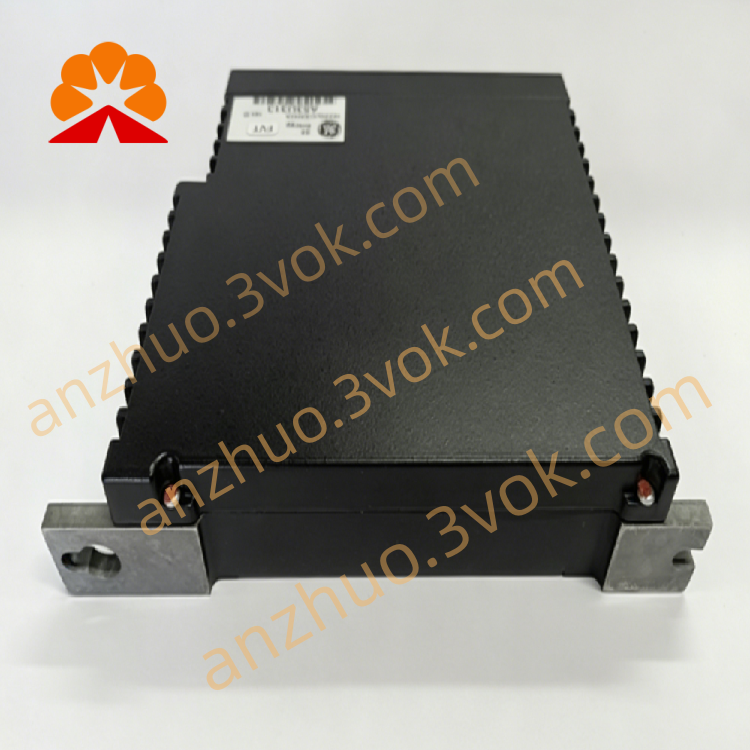
IS220UCSAH1A
Description
1、 Product Overview
IS220UCSAH1A is a high-performance industrial control processor module launched by General Electric (GE) in the United States. It belongs to the Speedtronic Mark VIe turbine control system series and is designed for the automation management of heavy power equipment such as gas turbines and steam turbines. It is the core unit of industrial automation and critical power control scenarios.
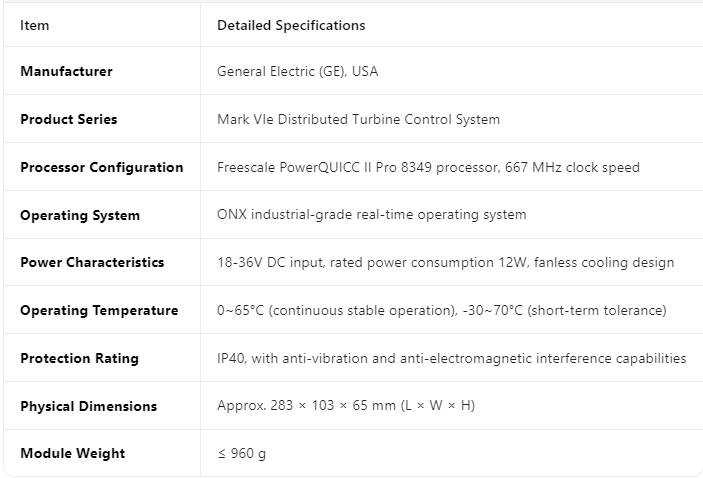
2、 Core technical specifications
3、 Hardware and Interface Design
interface configuration
The front panel is equipped with 6 RJ45 Ethernet interfaces, including 2 UDH (Unit Data Highway) communication ports, supporting 10/100BaseTX transmission rates and enabling redundant network deployment.
Integrated status indicator lights (power, operation, fault, communication status, etc.), supporting real-time monitoring of module working status.
Reserve dedicated debugging interfaces to support device configuration and firmware upgrades.
structural design
Compact single box design, supports cabinet base installation, can install up to 3 modules side by side, suitable for the space requirements of miniaturized cabinets.
All metal shell+side heat dissipation grille, achieving passive heat dissipation without the need for additional fans, reducing failure rate and noise.
4、 Core functional features
High performance control capability
Equipped with dedicated turbine control software, it can achieve closed-loop control of parameters such as speed, load, temperature, pressure, etc. of gas/steam turbines, support complex control algorithms, and ensure the safe and stable operation of power equipment.
Redundancy and reliability design
Support dual network redundancy configuration, with automatic switching of critical communication links; The module has fault self diagnosis and alarm functions, which can quickly locate and isolate the fault point, avoiding system shutdown.
Industrial grade environmental adaptability
Compliant with strict industrial standards, it can operate stably for a long time in harsh environments such as high temperature, high humidity, and strong electromagnetic interference, meeting the requirements of high-risk scenarios such as power plants and oil and gas.
System Compatibility
Seamless compatibility with GE Mark VIe control system platform, supporting linkage with CIMPLICITY human-machine interface (HMI) to achieve data visualization, remote monitoring and operation; Can communicate with third-party industrial systems through standard protocols.
5、 Typical application scenarios
Power industry: control of gas/steam turbine generator sets, automation management of power plant auxiliary equipment, core units of wind power control systems.
Oil and gas: pipeline compressor control, monitoring of drilling platform power equipment, automation of oil and gas processing equipment.
Industrial manufacturing: motion control of heavy equipment, automation of key process sections in production lines, process control of high temperature and high pressure equipment.
6、 Maintenance and Precautions
During installation, it is necessary to ensure good ventilation in the cabinet, avoid the accumulation of debris around the modules, and ensure that the heat dissipation grille is unobstructed.
Regularly check the input voltage of the power supply to avoid exceeding the 18-36V DC range and prevent module damage.
Module firmware upgrade requires the use of specialized debugging tools, and power outages are prohibited during the upgrade process.
Fault diagnosis can locate the problem through the front panel indicator lights and system logs, avoiding non professionals from disassembling the module.
Get a Quote