
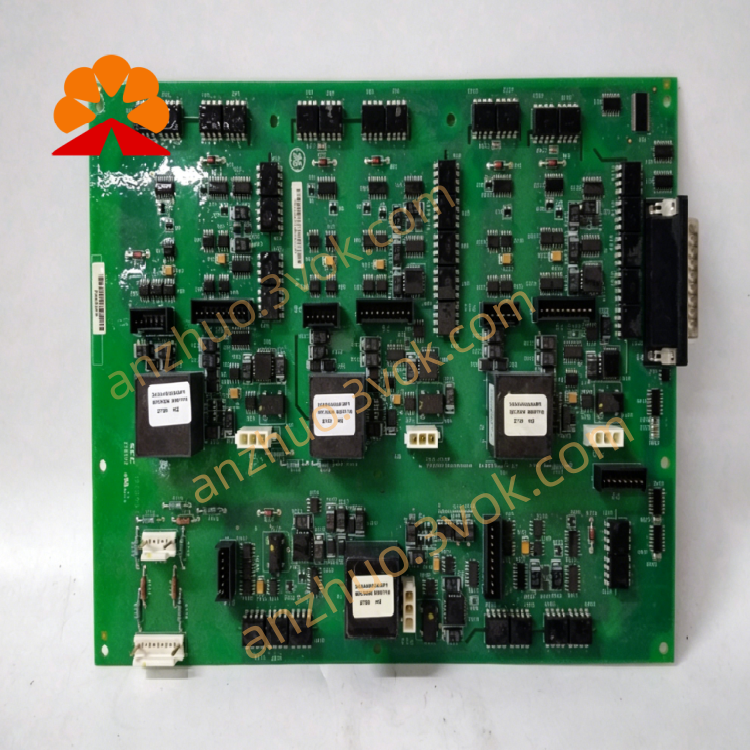
IS210SAMBH2AA MRP688936
Description
1、 Basic Information
Model: IS210SAMBH2AA
Material Number: MRP688936
Brand/Manufacturer: General Electric (GE)
Series: Speedtronic Mark VI Turbo Control System (IS210 Series)
Product Type: Acoustic Monitoring Terminal Board, PCB Circuit Board Component
2、 Core functions
Acoustic/vibration monitoring interface: designed specifically for gas turbines and steam turbines, used for high-frequency acoustic and vibration signal acquisition, conditioning, and front-end processing, real-time monitoring of mechanical abnormal noise and vibration.
18 differential inputs (2-wire system): 36 wiring terminals, connected to microphones/acoustic sensors, vibration probes, etc., supporting high-frequency signals from 10Hz to 20kHz.
18 buffer outputs: 36 terminals are used for external instruments to output AC voltage signals for system analysis and archiving.
EMI filtering: an onboard passive electromagnetic interference filter that suppresses external high-frequency noise and ensures signal integrity.
High speed sampling: Each channel has a sampling rate of 48kHz, meeting the high fidelity requirements of acoustic monitoring.
3、 Technical specifications
Input voltage: 24VDC ± 10%
Frequency response: 10Hz-20kHz
Sampling rate: 48kHz/channel
Working temperature: -30 ℃ to+65 ℃
Connector: DIN 41612 European socket+high-density terminal block
Protection/Certification: Industrial grade design, compliant with CE and UL certifications, suitable for harsh industrial environments
System architecture: compatible with Mark VI TMR (triple redundancy) and single redundancy configuration
4、 Design and Features
Dual terminal board architecture: integrates input and output two terminal areas, with clear wiring for easy on-site wiring and maintenance.
Full isolation and anti-interference: Channel isolation, EMI filtering, industrial grade components, high temperature resistance, vibration resistance, and electromagnetic interference resistance.
Seamless integration with Mark VI: plug and play, system automatic recognition, support for online diagnosis and status feedback, reducing debugging and operation costs.
Redundancy adaptation: can be used for acoustic protection and predictive maintenance of critical equipment, early warning of mechanical failures such as bearing wear, blade cracks, and rubbing.
5、 Typical application scenarios
Power generation industry: acoustic monitoring, vibration analysis, and fault diagnosis for gas turbines, steam turbines, and combined cycle power plants.
Oil and gas: online monitoring of noise and vibration in compressor units, large pump units, and turbine equipment.
Industrial processes: state monitoring and protection interlocking of chemical, metallurgical, and large-scale drive equipment.
Get a Quote