
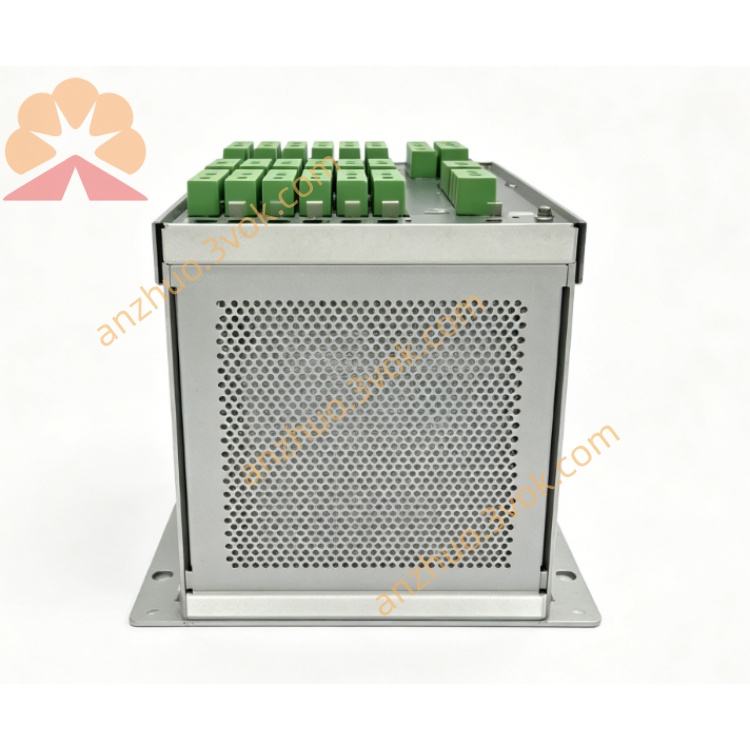
SCM4.2
Description
1. Product Overview
2. Main Features
Dual-Board Architecture: Combines a synchronisation/measurement board (compatible with SCM4.1) and a dedicated Engine Module (EM) for enhanced engine control.
Precision Synchronisation: Programmable Δf, ΔV, Δθ thresholds with adaptive logic for fast, safe generator-to-busbar connection.
Multi-Parameter Measurement: 3-phase voltage/current, frequency, power factor, active/reactive power, and harmonics (up to 15th) monitoring.
Integrated Protection Suite: Overcurrent, short-circuit, reverse power, overpower, over/undervoltage, over/underfrequency, and earth fault protection.
Dual-Loop Regulation: PID-based voltage/VAr and frequency/kW control; supports both electronic and mechanical governors/AVRs (via optional OPR-1 relay boards).
Flexible Communication: Modbus TCP/RTU, CANopen, and Ethernet interfaces for PLC/SCADA integration.
Marine & Industrial Compliance: Rugged design for harsh environments; wide-temperature operation, EMC compliance, and vibration resistance.
Local HMI: Backlit LCD and keypad for real-time data display and on-site parameter configuration.
Fault Data Logging: Non-volatile memory stores up to 200 fault events with timestamps and event codes.
Hot-Swappable Design: Supports online replacement without system shutdown (DM-4 platform).
3. Technical Specifications
3.1 Power Supply
Rated Voltage: 24 VDC (18–30 VDC operating range)
Power Source: Backplane-fed (DM-4 rack) or external terminal
Power Consumption: ≤18 W
Isolation: 2500 VAC between power and measurement circuits
3.2 Measurement Inputs
Generator Voltage: 0–690 VAC (PT selectable: 100/110/400/690 V)
Generator Current: CT secondary 1A or 5A (jumper-selectable)
Busbar Voltage: 0–690 VAC (PT selectable, same as generator)
Frequency: 45–65 Hz (50/60 Hz auto-detect)
Accuracy: Class 0.2 (V/I); Class 0.5 (power/frequency)
Sampling Rate: 1 kHz/channel (simultaneous sampling)
Harmonic Measurement: Up to 15th harmonic (THD monitoring)
3.3 Synchronisation Parameters
ΔFrequency Range: ±0.05–±1.0 Hz (default ±0.2 Hz)
ΔVoltage Range: ±1–±10% of rated voltage (default ±5%)
ΔAngle Range: 0–30° (default 10°)
Synchronisation Time: ≤8 seconds (adaptive)
Modes: Dynamic (auto-adaptive) / Static / Manual synchronisation
3.4 Protection Functions (Adjustable Thresholds)
Overcurrent (I>): 100–200% In (1–30 s delay)
Short-Circuit (I>>): 200–500% In (instantaneous, <50 ms)
Reverse Power (–P>): 2–20% Pn (1–10 s delay)
Overpower (P>): 100–150% Pn (5–60 s delay)
Overvoltage (V>): 105–120% Vn (1–10 s delay)
Undervoltage (V<): 80–95% Vn (1–10 s delay)
Overfrequency (f>): 51–55 Hz (50 Hz) / 61–65 Hz (60 Hz)
Underfrequency (f<): 45–49 Hz (50 Hz) / 55–59 Hz (60 Hz)
Earth Fault: 5–20% In (1–5 s delay)
3.5 Communication Interfaces
Ethernet: Modbus TCP (10/100 Mbps, RJ45)
Serial: RS485 (Modbus RTU, 9.6 kbps–1 Mbps)
Fieldbus: CANopen (250 kbps–1 Mbps)
Protocol Support: Modbus RTU/TCP, CANopen, DNP3 (optional)
3.6 Environmental Conditions
Operating Temperature: -25°C to +70°C
Storage Temperature: -40°C to +85°C
Relative Humidity: 5–95% RH, non-condensing
Vibration: 5–150 Hz, 0.1 mm amplitude (IEC 60068-2-6)
Protection Class: IP20 (terminals); IP40 (housing)
3.7 Mechanical Parameters
Mounting: DM-4 19-inch rack (3U: 130 × 90 × 45 mm)
Housing: Flame-retardant engineering plastic + metal reinforcement
Weight: ~1.5 kg
Compatibility: DM-4 Land / DM-4 Marine racks
4. Application Scope
Marine Power Plants: Main/auxiliary generator control, synchronisation, and load sharing in vessels (compliant with SOLAS).
Offshore Platforms: Isolated grid generator control and fault monitoring.
Industrial Standby Power: Backup generator control for factories, data centers, and hospitals.
Distributed Power Stations: Grid-tied/off-grid generator parallel operation and load management.
Hybrid Energy Systems: Generator integration with solar/wind for grid stability.
5. Installation and Wiring
5.1 Installation Requirements
Install in a standard DM-4 19-inch rack (3U slot) with proper grounding.
Maintain ≥20 mm clearance around the module for heat dissipation.
Mount away from frequency converters, large contactors, and high-power electromagnetic devices.
Use anti-static precautions during installation.
Do not install in corrosive, dusty, or condensing environments.
5.2 Wiring Rules
Perform all wiring with the system power off; only qualified electrical personnel should install or maintain the module.
Measurement wiring (V/I): 1.5–2.5 mm² shielded copper wire; separate from high-voltage cables.
Power wiring: 1.0–1.5 mm² copper wire (backplane-fed preferred).
Communication wiring: CAT5e/CAT6 (Ethernet); 0.8–1.0 mm² twisted pair (RS485/CAN).
Tighten terminal screws to 0.8–1.0 Nm.
Never open CT secondary circuits during operation—this induces lethal high voltage.
5.3 Terminal Definition (External)
Power: +24 VDC, 0 VDC, PE
Generator Voltage: G_L1, G_L2, G_L3, G_N
Generator Current: CT_L1, CT_L2, CT_L3, CT_Common
Busbar Voltage: B_L1, B_L2, B_L3, B_N
Breaker Control: BRK_ON, BRK_OFF, BRK_STATUS (NO/COM/NC)
Relay Outputs: ALARM, TRIP, AUX (NO/COM/NC, 250 VAC 8A / 24 VDC 8A)
Communication: ETH (RJ45), RS485 (A/B), CAN (H/L)
Digital Inputs: START, STOP, RESET, SYNC_ENABLE, GOVERNOR_AVR
5.4 OPR-1 Relay Board Installation (Optional)
Speed Governor: Mount one OPR-1 board for mechanical speed governor outputs.
Voltage Regulator: Mount a second OPR-1 board for mechanical AVR outputs.
Analogue Interface: Remove OPR-1 boards if using electronic governors/AVRs.
6. Operation and Configuration
6.1 Indicator & Display Description
PWR: Steady on = power normal; Off = no power/fault.
RUN: Flashing = normal operation; Steady on = fault.
SYNC: Flashing = synchronising; Steady on = synchronised.
COM: Flashing = communication active; Off = no communication.
ALARM: On = alarm triggered; Flashing = latched alarm.
TRIP: On = trip output activated (breaker open).
LCD Display: Real-time V/I/f/power, fault messages, and menu navigation.
6.2 Parameter Configuration (Local/Remote)
- Local Configuration (LCD/Keypad):
Navigate menus with arrow keys; confirm with ENTER.
Set PT/CT ratios, rated V/f, and synchronisation thresholds.
Configure protection thresholds, time delays, and PID parameters.
Set communication parameters (IP, baud rate, protocol).
Save settings to non-volatile memory.
- Remote Configuration (DEIF Utility Software):
Connect via Ethernet/RS485; compatible with Windows 10/11.
Detect module, configure parameters, and download settings.
Monitor real-time data, view fault logs, and update firmware.
6.3 Normal Operation
7. Safety Precautions
High voltage exists on V/I input terminals; wiring/maintenance must be done with power off.
Never open CT secondary circuits during operation—risk of lethal high voltage.
Do not disassemble the module without authorisation; voids warranty and risks electric shock.
Do not operate beyond specified V/f/temperature/vibration limits.
After protection tripping, eliminate the fault and reset the module before re-closing the breaker.
Keep the module away from water, moisture, and corrosive substances.
8. Maintenance
Monthly: Check terminal tightness, wire condition, and LED/LCD status.
Quarterly: Clean dust with a dry soft cloth; do not use liquid cleaners.
Annually: Verify measurement accuracy, synchronisation performance, and protection threshold calibration.
As Needed: Update firmware via DEIF Utility Software.
Replacement: Hot-swap the module (DM-4 rack) and reload configuration.
9. Troubleshooting
PWR Off: No 24 VDC, reverse wiring, or internal fuse blown.
RUN Fault: Self-test failure, configuration error, or hardware fault.
SYNC Failure: Incorrect Δf/ΔV/Δθ settings, wiring error, or parameter mismatch.
Measurement Inaccuracy: PT/CT ratio misconfiguration, wiring error, or interference.
False Alarm/Trip: Thresholds set too low, interference, or ground loop.
Communication Failure: Incorrect settings, cable fault, or network error.
OPR-1 Output Fault: Loose board mounting or wiring error.
10. Warranty and Disclaimer
Model: SCM4.2 Synchronising, Control & Measuring Module.
Warranty Period: 24 months from delivery date (normal installation/use).
Warranty Exclusions: Damage from wrong wiring, overvoltage, lightning, water ingress, unauthorised disassembly, or operation beyond environmental specs.
Modifications: Manufacturer reserves the right to update specs and this manual without prior notice.
Get a Quote