
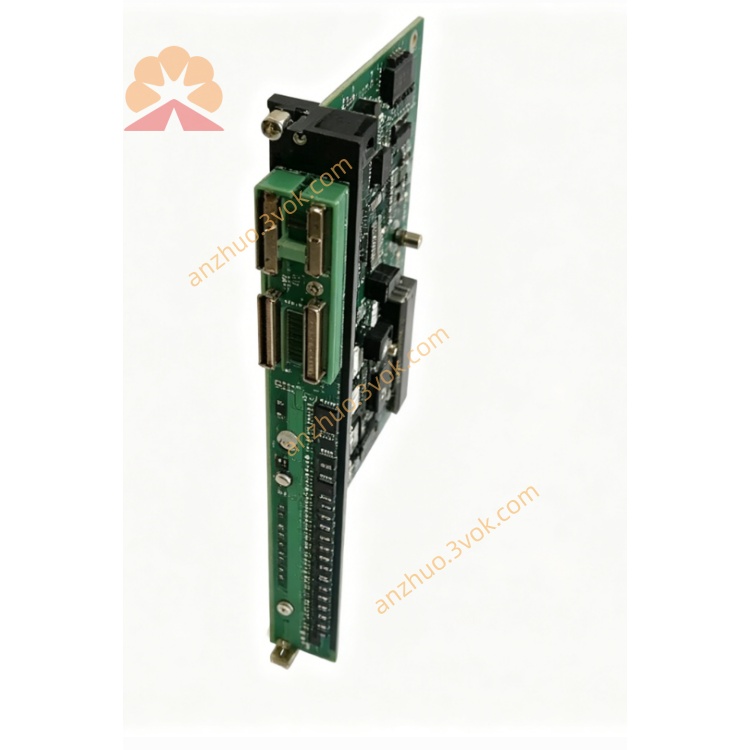
SCM-1
Description
1. Product Overview
2. Main Features
All-in-One Generator Control: Combines synchronizing, breaker control, voltage/reactive power regulation, and frequency/active power control.
Dynamic Synchronization: Programmable Δfrequency, Δvoltage, and Δangle thresholds for fast, safe generator-to-busbar connection.
Precision Measurement: Real-time monitoring of generator voltage, current, frequency, power factor, active/reactive power, and busbar parameters.
Integrated Protection: Overcurrent (I>), reverse power (–P>), overpower (P>), and busbar over/undervoltage/over/underfrequency protection.
Flexible Communication: Supports Modbus, CAN, DNP3 protocols for data exchange with PLCs, SCADA, and remote monitoring systems.
Industrial & Marine Grade: Rugged design for harsh environments; wide-temperature operation, EMC protection, and vibration resistance.
Compact Rack Mount: 19-inch rack-mounted or DIN rail installation for easy cabinet integration.
User-Friendly Configuration: Software-configurable parameters for control strategies, protection thresholds, and communication settings.
3. Technical Specifications
3.1 Power Supply
Rated Voltage: 24 VDC (18–30 VDC operating range)
Optional: 110/220 VAC (50/60 Hz)
Power Consumption: ≤15 W
Isolation: 2000 VAC between power and measurement circuits
3.2 Measurement Inputs
Generator Voltage: 0–690 VAC (PT selectable)
Generator Current: CT secondary 1A or 5A (selectable)
Busbar Voltage: 0–690 VAC (PT selectable)
Frequency: 45–65 Hz (50/60 Hz compatible)
Accuracy: Class 0.2 (voltage/current); Class 0.5 (power/frequency)
Sampling Rate: 1 kHz per channel
3.3 Synchronization Parameters
ΔFrequency Range: ±0.1–±1.0 Hz (adjustable)
ΔVoltage Range: ±1–±10% of rated voltage (adjustable)
ΔAngle Range: 0–30° (adjustable)
Synchronization Time: ≤10 seconds (typical)
Mode: Dynamic (preferred) / static synchronization
3.4 Protection Functions
Overcurrent (I>): 100–200% of rated current (adjustable)
Overpower (P>): 100–150% of rated active power (adjustable)
Reverse Power (–P>): 5–20% of rated active power (adjustable)
Busbar Overvoltage (UBB>): 105–120% of rated voltage (adjustable)
Busbar Undervoltage (UBB<): 80–95% of rated voltage (adjustable)
Busbar Overfrequency (fBB>): 51–55 Hz (50 Hz system) / 61–65 Hz (60 Hz system)
Busbar Underfrequency (fBB<): 45–49 Hz (50 Hz system) / 55–59 Hz (60 Hz system)
3.5 Communication Interfaces
Ethernet: Modbus TCP
Serial: RS485 (Modbus RTU), RS232 (optional)
Fieldbus: CANopen (optional)
Baud Rate: 9.6 kbps – 1 Mbps (adjustable)
Protocol Support: Modbus RTU/TCP, CAN, DNP3
3.6 Environmental Conditions
Operating Temperature: -25°C to +70°C
Storage Temperature: -40°C to +85°C
Relative Humidity: 5–95% RH, non-condensing
Vibration: 5–150 Hz, 0.1 mm amplitude (industrial/marine standard)
Protection Class: IP20 (terminals); IP66 (housing, optional)
3.7 Mechanical Parameters
Mounting: 19-inch rack (110 mm × 90 mm × 36 mm) or standard 35 mm DIN rail
Housing: Flame-retardant engineering plastic / metal (optional)
Weight: ~2 kg
4. Application Scope
Generator Parallel Operation: Automatic synchronization and load sharing for diesel/gas generators in marine and industrial power plants.
Marine Switchboards: Main/auxiliary generator control and protection in vessel power systems.
Industrial Standby Power: Backup generator control for factories, data centers, and hospitals.
Onshore Distributed Power Stations: Isolated grid generator control, synchronization, and fault monitoring.
Hybrid Energy Systems: Generator integration with solar/wind power for grid stability and backup power.
5. Installation and Wiring
5.1 Installation Requirements
Mount on a 19-inch rack or standard 35 mm DIN rail inside a control cabinet.
Maintain ≥20 mm clearance around the module for heat dissipation.
Install away from frequency converters, large contactors, and high-power electromagnetic devices to minimize interference.
Use anti-static precautions during installation to avoid damage to internal components.
Do not install in corrosive, dusty, dripping, or condensing environments.
5.2 Wiring Rules
Perform all wiring with the power off; only qualified electrical personnel should install or maintain the module.
Measurement wiring (voltage/current): 1.5–2.5 mm² copper wire; use shielded cable for long distances.
Power wiring: 1.0–1.5 mm² copper wire; separate from high-voltage cables.
Communication wiring: Twisted pair (CAT5e/CAT6 for Ethernet); 0.8–1.0 mm² for RS485/CAN.
Tighten terminal screws to 0.8–1.0 Nm to avoid loose connections and overheating.
Never open CT secondary circuits during operation—this induces lethal high voltage.
5.3 Terminal Definition
Power: +24 VDC, 0 VDC, PE (protective earth)
Generator Voltage: G_V1, G_V2, G_V3, G_N
Generator Current: CT1 (L1), CT2 (L2), CT3 (L3), CT_Common
Busbar Voltage: B_V1, B_V2, B_V3, B_N
Breaker Control: BRK_ON, BRK_OFF, BRK_STATUS (NO/COM/NC)
Communication: ETH (TCP/IP), RS485 (A/B), CAN (H/L)
Relay Outputs: ALARM (NO/COM/NC), TRIP (NO/COM/NC)
5.4 Wiring Notes
Connect the PE terminal securely to the cabinet ground for safety and EMC protection.
CT circuits must be connected firmly; open CT terminals during operation will induce dangerous high voltage.
Do not apply voltage exceeding 690 VAC to voltage input terminals.
Relay trip outputs shall be matched with breaker coil rated capacity.
After wiring, double-check all connections to prevent miswiring or reverse polarity.
6. Operation and Configuration
6.1 Indicator Description
PWR: Steady on = power normal; Off = no power or fault.
RUN: Flashing = normal operation; Steady on/off = fault.
SYNC: Flashing = synchronization in progress; Steady on = synchronized.
COM: Flashing = communication active; Off = no communication.
ALARM: On = alarm triggered; Flashing = latched alarm.
TRIP: On = trip output activated (breaker open).
6.2 Parameter Configuration
Connect to PC: Use Ethernet/RS232 to connect the module to a PC.
Install Software: DEIF configuration software (compatible with Windows 10/11).
Detect Module: Launch software, detect SCM-1, and set communication parameters (IP address, baud rate, protocol).
Configure Measurement: Set PT/CT ratios, rated voltage/frequency, and measurement ranges.
Set Synchronization: Adjust Δfrequency, Δvoltage, Δangle thresholds, and synchronization mode.
Configure Protection: Set overcurrent, overpower, reverse power, and busbar voltage/frequency thresholds.
Set Control Logic: Configure voltage/reactive power regulation, frequency/active power control, and breaker on/off logic.
Download & Save: Download configuration to the module; save project file for future use.
6.3 Normal Operation
7. Safety Precautions
High voltage exists on voltage/current input terminals; wiring and maintenance must be done in power-off state.
Never open CT secondary circuits during operation—this induces lethal high voltage.
Do not disassemble the module without authorization; this voids the warranty and may cause electric shock.
Do not operate beyond the specified voltage, temperature, or vibration limits.
After protection tripping, eliminate the fault and reset the module before re-closing the generator breaker.
Keep the module away from water, moisture, and corrosive substances.
8. Maintenance
Monthly: Check terminal tightness, wire condition, and LED status.
Quarterly: Clean dust from the surface with a dry soft cloth; do not use liquid cleaners.
Annually: Verify measurement accuracy, synchronization performance, and protection threshold calibration.
As Needed: Update firmware via configuration software to add features or fix bugs.
Replacement: If the module fails or is damaged, replace it with a new unit and reload the configuration.
9. Troubleshooting
PWR Off: No 24 VDC power, reverse wiring, or internal fuse blown.
RUN Fault: Self-test failure, configuration error, or hardware fault.
SYNC Failure: Incorrect Δfrequency/Δvoltage/Δangle settings, wiring error, or generator/busbar parameter mismatch.
Measurement Inaccuracy: PT/CT ratio misconfiguration, wiring error, or signal interference.
False Alarm/Trip: Protection thresholds set too low, electrical interference, or ground loop.
Communication Failure: Incorrect settings, cable fault, or network error.
10. Warranty and Disclaimer
Model: SCM-1 Synchronizing & Measuring Module.
Warranty Period: 24 months from the date of delivery, under normal installation and use.
Warranty Exclusions: Damage from wrong wiring, overvoltage, lightning, water ingress, unauthorized disassembly, or operation beyond environmental specifications.
Modifications: The manufacturer reserves the right to update product specifications and this manual without prior notice.
Liability: The manufacturer shall not be liable for any indirect, incidental, or consequential losses arising from improper installation or use.
Get a Quote