
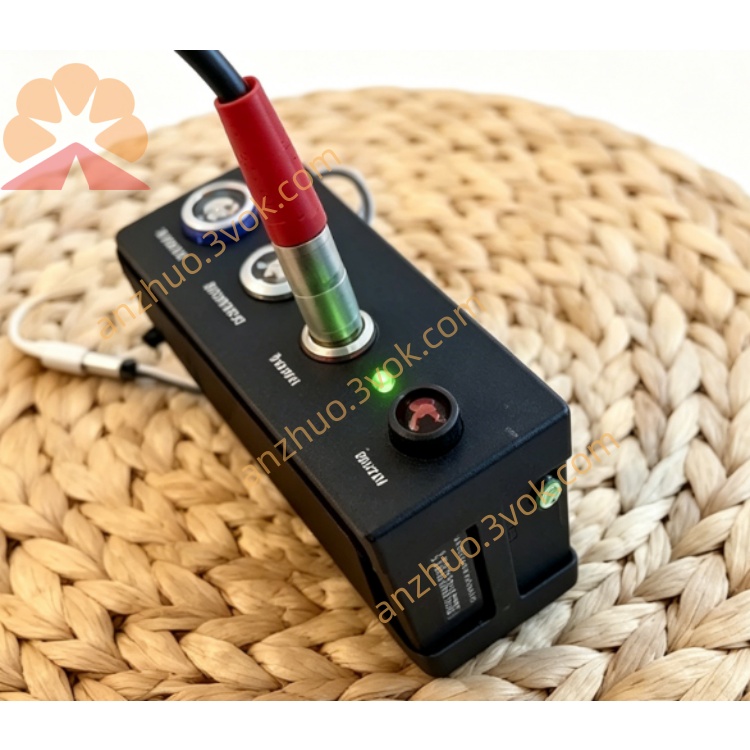
Description
1. Product Overview

2. Key Features
Core Differential Protection: Three‑phase current comparison (I1 vs. I2) for generator/motor internal faults.
High‑Speed Tripping: Typical response time 70 ms (dependable for short‑circuit isolation)DEIF.
Adaptive Unbalance Compensation: Adjustable algorithm compensates for CT mismatch, load unbalance, and external faults (prevents false trips)DEIF.
Integrated LCD & Keypad: Real‑time display of currents, differential values, status, and alarms; local parameter editingDEIF.
Event Log: 150‑entry chronological log (time‑stamped alarms/trips)DEIF.
Flexible Protection Curves: User‑adjustable warning/trip thresholds + fixed trip mode.
Programmable Relay Outputs: 3 outputs (trip, alarm, status) with configurable logic.
Direct High‑Voltage Input: Measures up to 690 VAC directly (no external VT required)DEIF.
PC Tool Support: DEIF PICUS software for remote configuration, monitoring, and firmware updatesDEIF.
Certifications: CE, IEC 60255, DNV‑GL, ABS (marine)DEIF.
3. Technical Specifications
3.1 Electrical Ratings
| Parameter | Specification |
|---|---|
| Model | MDR‑2 (Multi‑Differential Relay) |
| Manufacturer | DEIF A/S |
| Protected Objects | 3‑phase generators/motors; generator‑transformer blocks (Option C4) |
| AC Current Inputs (CT) | |
| – Primary/Secondary | 5 A AC (CT secondary, 3 phases each side) |
| – Range | 0–6 A AC |
| – Accuracy | ±1% FS @ 25 °CDEIF |
| AC Voltage Inputs | |
| – Range | 100–690 VAC, 50/60 Hz (L1/L2/L3)DEIF |
| – Accuracy | ±0.5% FS |
| Auxiliary Supply | |
| – Voltage | 24 VDC ±20% (18–32 VDC) or 85–264 VAC, 50/60 Hz |
| – Power | ≤15 W |
| Protection Performance | |
| – Differential Current Range | 0–1 A (adjustable threshold: 0.05–0.5 A) |
| – Response Time | ≤70 ms (typical, 2× setpoint)DEIF |
| – Trip Modes | IDMT, DT, instantaneous; fixed value |
| Output Relays | |
| – Trip Relay | 1 × 250 VAC / 8 A (NO/NC) |
| – Alarm/Status Relays | 2 × 250 VAC / 5 A (NO/COM) |
| Communication (Option J3) | |
| – Interface | RS232 (DEIF PICUS software) |
3.2 Environmental & Mechanical
| Parameter | Specification |
|---|---|
| Operating Temperature | –20 °C to +70 °C (standard); –40 °C to +70 °C (marine) |
| Storage Temperature | –40 °C to +85 °C |
| Humidity | 5–95% RH non‑condensing |
| Vibration | 2–13.2 Hz: ±1 mm; 13.2–100 Hz: ±0.7 g |
| Enclosure | Front: IP40; Terminals: IP20; Panel (Option X): IP54 (gasket) |
| Dimensions (W×H×D) | 215 × 115 × 75 mm |
| Weight | Approx. 1.0 kg (incl. packaging) |
| Mounting | 35 mm DIN rail or base plate (6 screws) |
4. Application Scope
Land‑Based Generators: Synchronous/asynchronous generators (50/60 Hz) for internal winding/short‑circuit protection.
Marine Power Systems: Shipboard generators, main/auxiliary motors, and DP (Dynamic Positioning) critical equipment.
Offshore Platforms: Oil/gas rig generators and large motors (harsh environment, marine‑grade certified).
Industrial Motors: Medium/high‑voltage motors (3–11 kV) for pulp/paper, mining, and water treatment plants.
Generator‑Transformer Blocks: Combined protection for generator + step‑up transformer (Option C4).
5. Installation & Wiring
5.1 Installation Requirements
Mounting: Install on 35 mm DIN rail or base plate; ≥50 mm clearance for ventilation and cable bending.
Environment: Avoid direct sunlight, moisture, corrosive gases, and excessive vibration (use shock mounts if needed).
ESD Protection: Use anti‑static wristband when handling (static‑sensitive PCB components).
Cable Separation: Separate AC current/voltage cables from DC control/communication cables by ≥10 cm to reduce interference.
5.2 Terminal Wiring (Simplified)
| Terminal Group | Description | Wire Gauge |
|---|---|---|
| Auxiliary Power | ||
| 1–2 | 24 VDC (+/−) or 85–264 VAC | 1.5 mm² |
| 3 | Chassis ground (PE) | 2.5 mm² |
| CT Inputs (Primary Side, I1) | ||
| 4–6 | 5 A AC (L1/L2/L3, CT secondary) | 2.5 mm² |
| CT Inputs (Secondary Side, I2) | ||
| 7–9 | 5 A AC (L1/L2/L3, CT secondary) | 2.5 mm² |
| Voltage Inputs (L1/L2/L3) | ||
| 10–12 | 100–690 VAC (line‑line) | 2.5 mm² |
| Relay Outputs | ||
| 13–14 | Trip relay (NO/NC) | 1.5 mm² |
| 15–16 | Alarm relay (NO/COM) | 1.5 mm² |
| 17–18 | Status relay (NO/COM) | 1.5 mm² |
| Communication (Option J3) | ||
| 19–20 | RS232 (TX/RX/GND) | 1.0 mm² |
CT Polarity: Strictly match I1 (primary) and I2 (secondary) phase polarities (L1→L1, L2→L2, L3→L3).
CT Safety: Never open‑circuit CT secondary terminals (risk of lethal overvoltage). Short CTs before wiring.
Shielded Cables: Use twisted‑pair shielded cables for CT/voltage signals; ground shield at one end only (MDR‑2 side).
Terminal Torque: Tighten terminals to 0.8–1.0 Nm to avoid loose connections and overheating.
Fusing: Protect AC voltage inputs with a 2 A slow‑blow fuse.
6. Front Panel & Operation
6.1 Front Panel Layout
LCD Display (16×2 characters):
Top row: Measured values (I1, I2, differential current Id, voltage, frequency).
Bottom row: Status, alarms, trip messages, and menu options.
LED Indicators:
POWER: On = Aux supply OK.
RUN: Flashing = Normal operation; Solid = Fault/trip.
ALARM: On = Active alarm; Flashing = Unacknowledged alarm.
TRIP: On = Trip relay activated (fault detected).
Keypad (6 buttons):
▲/▼: Scroll menus/values.
◄/►: Move cursor/select fields.
ENTER: Confirm selection/save settings.
ESC: Exit menu/cancel changes.
6.2 Startup & Configuration
Power On: Apply aux supply; POWER LED on; RUN LED flashes; LCD shows startup screen (DEIF MDR‑2, firmware version).
CT/VT Connection Check: Verify I1/I2 currents (balanced in healthy condition); differential current Id ≈ 0 A (≤0.05 A).
Nominal Settings (Menu 4010):
Set Nominal Current (In): Match CT secondary (5 A).
Set Nominal Frequency: 50 Hz or 60 Hz.
Set Nominal Voltage: Match system voltage (e.g., 400 VAC).
Differential Protection Settings (Menu 4020):
Warning Threshold (Id‑W): 0.1 A (10% of In).
Trip Threshold (Id‑T): 0.2 A (20% of In).
Trip Curve: Select IDMT (standard) or instantaneous.
Unbalance Compensation: Enable (default) and set to 5–10% (match CT tolerance).
Relay Output Configuration (Menu 4030):
Trip Relay: Assign to differential trip (default).
Alarm Relay: Assign to warning/CT fault.
Status Relay: Assign to “Healthy” (energised in normal operation).
Event Log Review (Menu 5000): Check for pre‑existing alarms/trips; clear log if needed (password protected).
PC Tool Connection (Option J3): Connect RS232 to PC; launch PICUS software; verify communication; backup settings.
6.3 Normal Operation
LCD Display: Cycles through I1, I2, Id, voltage, frequency, and status.
RUN LED: Flashes every 1 second (normal).
Id Value: Stable near 0 A (≤0.05 A) in healthy condition.
Alarms: If Id exceeds warning threshold, ALARM LED on; LCD shows “DIFF WARNING”.
Trips: If Id exceeds trip threshold, TRIP LED on; trip relay activates (opens generator breaker); LCD shows “DIFF TRIP”; event log records time/value.
7. Safety Precautions
High Voltage Hazard: Only qualified electrical personnel may install/service. Disconnect all power sources (aux DC/AC, CTs, VTs) before wiring.
CT Overvoltage Risk: Never open CT secondary circuits with primary current flowing (lethal voltage). Short CTs before connecting/disconnecting.
ESD Sensitivity: Static electricity can damage internal PCB. Use anti‑static wristband and work on grounded ESD mat.
Relay Output Caution: Trip/alarm relays switch high voltages (250 VAC). Ensure load ratings are not exceeded; use appropriate insulation.
No Unauthorised Modification: Do not open the enclosure or modify internal circuits. Tampering voids warranty and may cause unsafe operation.
Environmental Limits: Do not operate outside –20 °C to +70 °C (standard) or –40 °C to +70 °C (marine).
8. Maintenance & Storage
8.1 Regular Maintenance (Every 6 Months)
Visual Inspection: Check for loose terminals, damaged wiring, corrosion, or overheating signs (discolouration).
Cleaning: Wipe front panel with dry lint‑free cloth; no liquid cleaners (avoid water ingress).
LED/Display Check: Verify POWER/RUN/ALARM/TRIP LEDs operate correctly; LCD shows clear, legible values.
Measurement Calibration: Compare MDR‑2 readings (I1, I2, Id) with external precision meter (accuracy ±1% required).
Terminal Tightness: Retorque all terminals to 0.8–1.0 Nm.
Relay Test: Inject differential current (Id > trip threshold); verify TRIP LED and trip relay activate; check breaker operation (if connected).
Event Log Backup: Download and save event log via PICUS software (for trend analysis/troubleshooting).
8.2 Storage Guidelines
Packaging: Store in original anti‑static packaging with desiccant.
Environment: 10–30 °C, 30–70% RH, dry, clean, and dust‑free.
Protection: Avoid direct sunlight, extreme temperatures, and mechanical shock/vibration.
Duration: Shelf life ≤2 years. Inspect for ESD damage and test basic functions before use if stored longer.
9. Troubleshooting
| Fault Phenomenon | Possible Cause | Solution |
|---|---|---|
| POWER LED Off | No aux supply / blown fuse / wrong voltage | Check aux wiring; replace fuse; verify voltage (24 VDC or 85–264 VAC) |
| RUN LED Solid (Fault) | CT open circuit / I1/I2 polarity mismatch / overvoltage | Short CTs and check wiring; correct polarity; verify voltage input |
| ALARM LED On (DIFF WARNING) | Minor current unbalance / CT drift / load fluctuation | Check CT connections; adjust unbalance compensation; monitor load |
| TRIP LED On (DIFF TRIP) | Internal generator/motor fault / severe CT mismatch / wiring fault | Isolate generator/motor; inspect windings; verify CT polarity/wiring |
| LCD No Display | Faulty LCD / loose display cable / power supply issue | Check power; reconnect display cable; contact DEIF service |
| No Communication (PICUS) | Wrong cable / incorrect COM port / faulty RS232 | Use null‑modem RS232 cable; select correct COM port; check option J3 |
| False Tripping | Unbalance compensation too low / CT saturation / external fault | Increase compensation (10–15%); check CT rating; verify fault zone |
10. Warranty & Disclaimer
Model: MDR‑2 Multi‑Differential Protection Relay.
Warranty Period: 24 months from delivery date (normal installation/use per manual).
Warranty Exclusions: Misuse, overvoltage, lightning, water ingress, unauthorised modification, improper maintenance, or CT/VT faults.
Specifications Subject to Change: Manufacturer reserves the right to update specifications without prior notice.
Liability Limitation: Manufacturer is not liable for indirect or consequential damages (e.g., downtime, lost revenue, equipment damage).
Documentation Version: 1.0 (2026); latest manual and firmware available at www.deif.comDEIF.
Get a Quote