
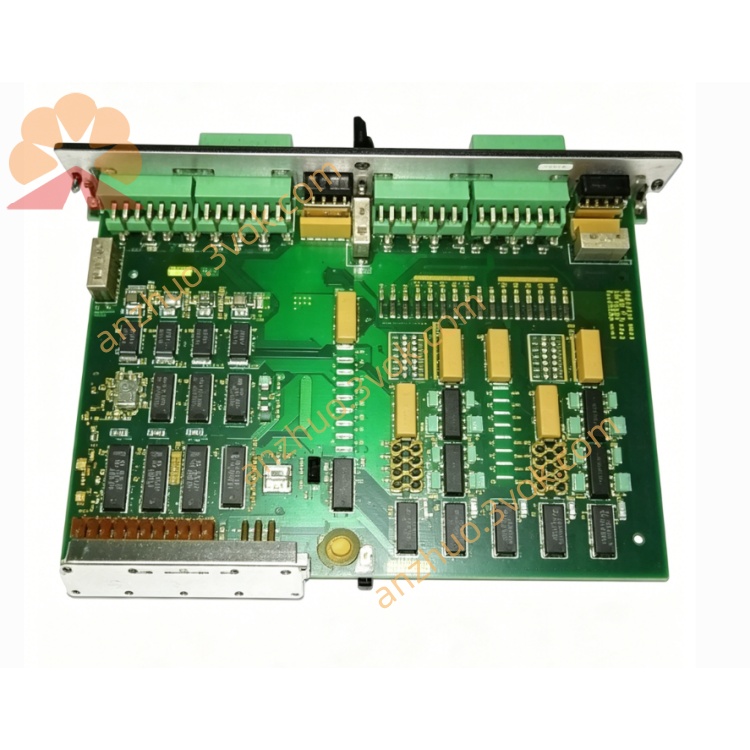
Description
1. Product Overview
2. Key Features
All‑in‑One Controller: Protection, engine control, synchronisation, load sharing, and power management.
Multi‑Generator Support: Controls up to 16 gensets in parallel (diesel/gas/hybrid).
Comprehensive Protection: Overcurrent, overload, reverse power, under/over‑voltage/frequency, earth fault.
Automatic Synchronisation: Fast, precise voltage/frequency/phase matching for breaker closure.
Intelligent Load Management: Base load, peak shaving, import/export control, load shedding.
Dual Communication: Modbus RTU (RS‑485) + CANopen; Ethernet optional (Modbus TCP).
Event Log & Alarms: 500+ event history with timestamps for troubleshooting.
Marine & Industrial Certified: CE, DNV‑GL, ABS, IEC 60068 compliant.
Wide Temperature: –20 °C to +70 °C (industrial); –40 °C to +70 °C (marine variant).
3. Technical Specifications
3.1 Electrical Ratings
| Parameter | Specification |
|---|---|
| Model | IPM‑1 (Integrated Power Management Controller) |
| Manufacturer | DEIF A/S |
| Controlled Gensets | Up to 16 (parallel operation) |
| I/O Channels | |
| – Analogue Inputs (AI) | 8 × configurable (0–10 V / 4–20 mA) |
| – Digital Inputs (DI) | 16 × 24 VDC (galvanically isolated) |
| – Digital Outputs (DO) | 8 × 24 VDC / 0.5 A (relay/transistor) |
| – Synchronisation Inputs | Voltage/frequency/phase (generator & busbar) |
| Control Supply | 24 VDC ±20% (18–32 VDC), ≤18 W |
| Isolation | 2.5 kV AC (1 min) I/O‑to‑power |
| Analogue Resolution | 12‑bit (AI) |
| Accuracy | ±0.2% FS @ 25 °C |
| Communication | Modbus RTU (RS‑485), CANopen; Ethernet (optional) |
3.2 Environmental & Mechanical
| Parameter | Specification |
|---|---|
| Operating Temperature | –20 °C to +70 °C (standard); –40 °C to +70 °C (marine) |
| Storage Temperature | –40 °C to +85 °C |
| Humidity | 5–95% RH non‑condensing |
| Vibration | 2–13.2 Hz: ±1 mm; 13.2–100 Hz: ±0.7 g |
| Enclosure | IP20 (front), IP00 (rear) |
| Dimensions (W×H×D) | 328.5 × 122 × 114 mm |
| Weight | Approx. 2.1 kg |
| Mounting | 35 mm DIN rail / panel mount |
4. Application Scope
Marine Power Systems: Shipboard genset control, switchboard management, DP (Dynamic Positioning) support.
Offshore Platforms: Oil/gas rig power management, parallel gensets, black‑start.
Land‑Based Power Plants: Industrial CHP, standby power, peak shaving, grid‑connected gensets.
Hybrid Systems: Integration of diesel, solar, wind, and battery storage.
Emergency Power: Critical infrastructure backup (hospitals, data centres).
5. Installation & Wiring
5.1 Installation Requirements
Mounting: Install on 35 mm DIN rail or panel; ≥50 mm clearance for ventilation.
Environment: Avoid direct sunlight, moisture, corrosive gases, and excessive vibration.
ESD Protection: Use anti‑static wristband when handling (static‑sensitive components).
Cable Separation: Separate power (24 VDC) and signal (I/O/communication) cables by ≥10 cm.
5.2 Terminal Wiring (Simplified)
| Terminal Group | Description | Wire Gauge |
|---|---|---|
| Power | ||
| 1–2 | 24 VDC (+/−) | 1.5 mm² |
| 3 | Chassis ground (PE) | 2.5 mm² |
| Analogue Inputs (AI1–AI8) | ||
| 4–11 | 0–10 V / 4–20 mA | 1.0 mm² |
| Digital Inputs (DI1–DI16) | ||
| 12–27 | 24 VDC logic (isolated) | 1.0 mm² |
| Digital Outputs (DO1–DO8) | ||
| 28–35 | 24 VDC / 0.5 A | 1.5 mm² |
| Synchronisation (SYNC) | ||
| 36–39 | Gen/bus voltage (AC) | 2.5 mm² |
| Communication | ||
| 40–41 | RS‑485 (Modbus RTU) | 1.0 mm² |
| 42–43 | CANopen (H/L) | 1.0 mm² |
AI Configuration: Set via DEIF Utility Software (no DIP switches).
Shielded Cables: Use twisted‑pair shielded cables for analogue/sync signals; ground shield at one end only.
Terminal Torque: 0.8–1.0 Nm.
AC Voltage: Isolate AC sync cables from DC power cables to avoid noise.
6. Front Panel & Operation
6.1 Front Panel Layout
LED Indicators
POWER: On = 24 VDC present.
RUN: Flashes = normal operation; solid = fault.
SYNC: On = synchronised; flashing = synchronising.
ALARM: On = active alarm; flashing = warning.
LCD Display (2×16): Real‑time data, menus, alarms, event log.
Push Buttons: Navigation (↑/↓/←/→), Enter, Escape.
6.2 Startup & Configuration
Power On: Apply 24 VDC; POWER LED on; LCD boot screen.
Initial Setup: Select language, unit (kW/V/Hz), and system type (marine/industrial).
Genset Configuration: Set number of gensets (1–16), engine type, and generator ratings.
I/O Mapping: Assign AI/DI/DO to functions (e.g., coolant temp, oil pressure, breaker control).
Protection Settings: Configure thresholds for overcurrent, reverse power, etc.
Synchronisation: Set voltage/frequency/phase tolerance for breaker closure.
Load Management: Define load share, shedding, and import/export logic.
Operation: RUN flashes; SYNC on when synchronised; system active.
7. Safety Precautions
High Voltage Hazard: Only qualified electricians may install/service; disconnect all power (DC + AC) before wiring.
ESD Risk: Static electricity can damage the PCB; use anti‑static protection.
AC Voltage: Synchronisation terminals carry AC voltage; risk of electric shock.
No Unauthorised Modification: Do not open the enclosure; tampering voids warranty.
Environmental Limits: Do not operate outside –20 °C to +70 °C (standard) or –40 °C to +70 °C (marine).
8. Maintenance & Storage
8.1 Regular Maintenance (Every 6 Months)
Visual Inspection: Loose terminals, damaged wiring, corrosion, or overheating signs.
Cleaning: Wipe front panel with dry cloth; no liquid cleaners.
LED/LCD Check: Verify POWER/RUN/SYNC/ALARM LEDs and LCD display.
I/O Test: Use DEIF Utility Software to test AI/AO/DI/DO accuracy.
Communication Check: Verify Modbus/CANopen/Ethernet (if fitted) connectivity.
Cable Tightness: Retorque terminals to 0.8–1.0 Nm.
Firmware Update: Install latest firmware from DEIF website (if available).
8.2 Storage Guidelines
Condition: Original anti‑static packaging, 10–30 °C, 30–70% RH.
Environment: Dry, avoid direct sunlight/extreme temps.
Duration: Shelf life ≤2 years; inspect for ESD damage before use if stored longer.
9. Troubleshooting
| Fault Phenomenon | Possible Cause | Solution |
|---|---|---|
| POWER LED Off | No 24 VDC / blown fuse | Check power wiring; replace 3 A fuse |
| RUN LED Solid (Fault) | Config error / I/O fault / overvoltage | Check LCD alarm; verify config/wiring |
| SYNC LED Not On | Voltage/freq/phase mismatch / wiring fault | Adjust gen voltage/freq; check AC wiring |
| Analogue Input Inaccurate | Config mismatch / noisy signal / sensor fault | Correct AI scaling; use shielded cables |
| Communication Failure | Wrong address / cable fault / termination | Verify Modbus/CAN address; check cable/termination |
| Genset Fails to Start | DI wiring fault / engine fault / config error | Check start DI; verify engine; check start sequence |
10. Warranty & Disclaimer
Model: IPM‑1 Integrated Power Management Controller.
Warranty Period: 24 months from delivery date (normal installation/use).
Warranty Exclusions: Misuse, overvoltage, lightning, water ingress, unauthorised modification, or improper maintenance.
Specifications Subject to Change: Manufacturer reserves the right to update specifications without prior notice.
Liability Limitation: Manufacturer is not liable for indirect or consequential damages (e.g., downtime, lost revenue).
Documentation Version: 1.0 (2026); latest manual available at www.deif.com.
Get a Quote