
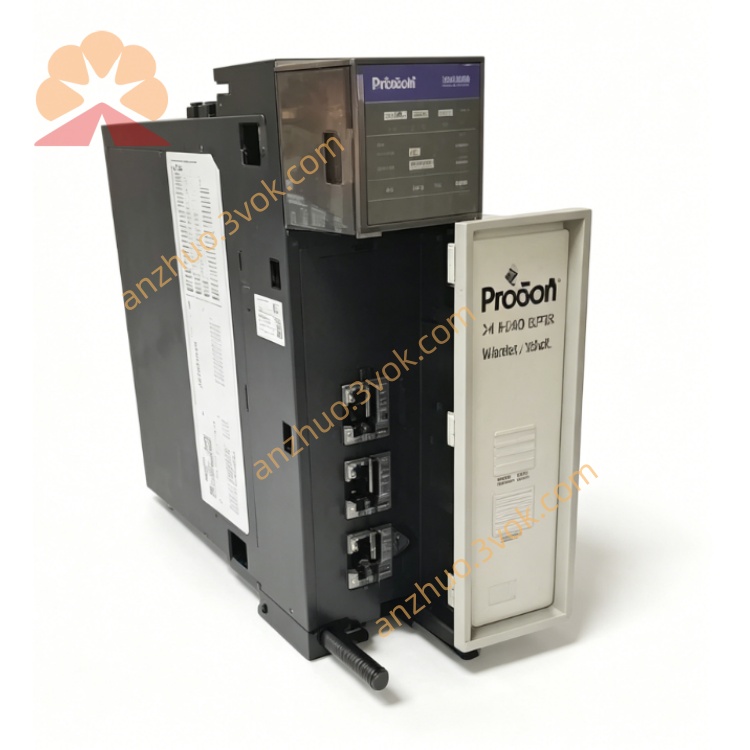
MVI56-BAS
Description
1. Product Overview
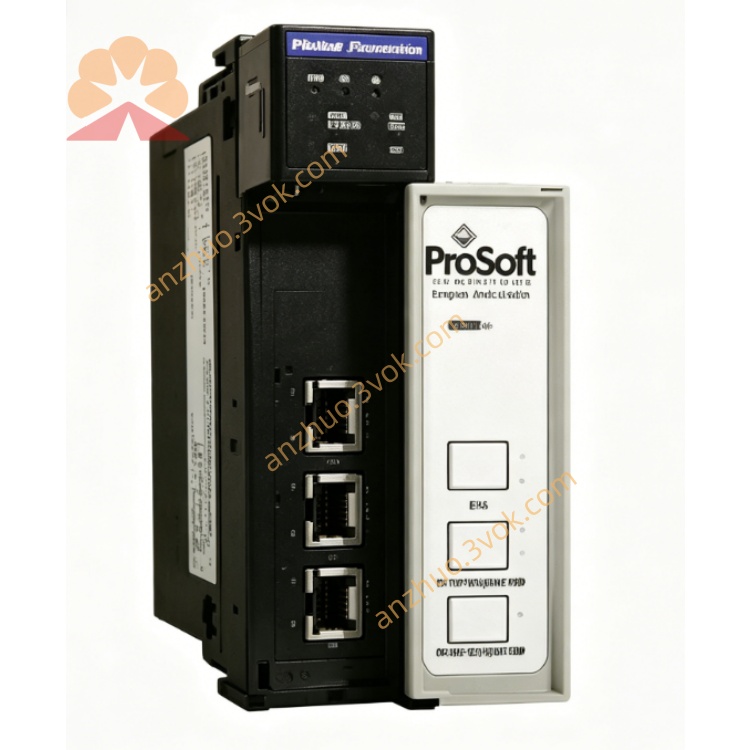
Model: MVI56‑BAS
Manufacturer: ProSoft Technology (inRAx series)
Platform: Allen‑Bradley ControlLogix (1756 chassis, single‑slot)
Core Function: BASIC‑52 programmable module; migrates legacy 1771‑DB / 1747‑BAS BASIC programs to ControlLogix.
Purpose: Custom serial/ASCII/DF1 communications, protocol conversion, and standalone logic offloaded from PLC.
Integration: High‑speed backplane I/O with ControlLogix tags; CF card for program storage/backup.

2. Key Features
BASIC‑52 programming: 24,065 bytes RAM for user code; supports math, strings, I/O, serial comms.
Three onboard ports:
CFG: RS‑232 for programming/debug
PRT1: RS‑232/422/485 (ASCII / DF1)
PRT2: RS‑232/422/485 (ASCII / DF1)
DF1 support: Full‑duplex or half‑duplex slave (Rockwell protocol).
DH‑485 port: Connect to legacy SLC 500 / DH‑485 devicesProSoft Technology Inc.
ASCII device interface: Modems, printers, scanners, scales, serial instruments.
CF card slot: Store/load BASIC programs; easy backup/restore.
LEDs: PWR, RUN, BP LINK, PORT ACT (per port).
Approvals: CE, UL/cUL, CSA, ATEX, RoHS; Class 1 Div 2.
3. Technical Specifications
General
Slot usage: 1 slot (1756 local/remote rack)
Backplane current: 800 mA @ 5.1 VDC; 3 mA @ 24 VDCProSoft Technology Inc
User RAM: 24,065 bytes (BASIC program + data)
Program storage: CompactFlash (FAT16)
Configuration: ProSoft Configuration Builder (PCB) + BASIC editor
Communication Ports
CFG (RS‑232): 9.6–115.2 kbps; programming/debug
PRT1/PRT2 (RS‑232/422/485): 1.2–115.2 kbps; ASCII/DF1
DH‑485: 19.2 kbps; SLC 500 / DH‑485 networkProSoft Technology Inc
Isolation: 500 V optical isolation (ports ↔ backplane)
Environmental
Operating temp: 0°C to +60°C (32°F to 140°F)ProSoft Technology Inc
Storage temp: ‑40°C to +85°CProSoft Technology Inc
Humidity: 5%–95% non‑condensing
Vibration: 5 g (10–150 Hz)ProSoft Technology Inc
Shock: 30 g (operational), 50 g (non‑operational)ProSoft Technology Inc
4. LED Indicators
PWR: On = backplane power OK
RUN: On = module active; flashing = BASIC program running
BP LINK: On = backplane I/O exchange active
PRT1/PRT2/CFG ACT: Flashing = serial data traffic
5. Typical BASIC Applications
Legacy migration: Reuse 1771‑DB / 1747‑BAS code in ControlLogix.
Custom serial protocols: Build drivers for non‑standard ASCII devices.
Data concentrators: Poll multiple serial instruments; pass data to PLC.
Protocol converters: ASCII ↔ DF1; serial ↔ backplane tags.
Standalone math/logic: Run complex calculations independent of PLC scan.
Printer/logger interfaces: Direct serial printing, data logging to CF card.
6. Advantages
Legacy code reuse: Protects investment in existing BASIC programs.
Offloads PLC: Runs serial comms & math without slowing ladder logic.
Highly flexible: BASIC‑52 enables custom logic not possible with standard modules.
Cost‑effective: Eliminates need for external PCs/gateways for simple serial tasks.
Seamless Rockwell integration: Native backplane I/O, no custom drivers.
Get a Quote