
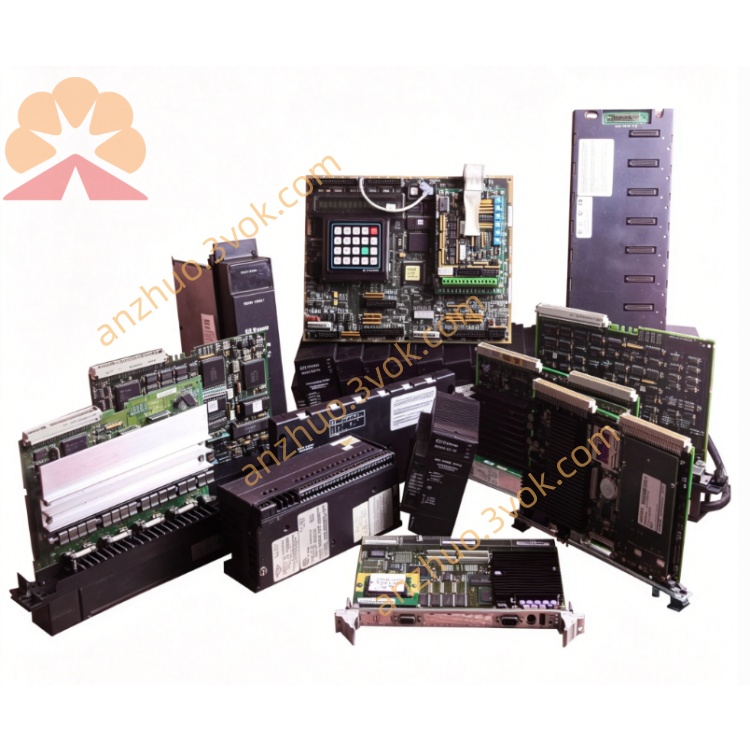
XYCOM 81987-101A1805 Product Introduction
Description
XYCOM 81987-101A1805 Product Introduction
XYCOM 81987-101A1805 (referred to as 81987-101A) is a high-performance, high-density analog-dominant I/O board card of the 1805 series from XYCOM, designed specifically for process industries and precise control scenarios. It focuses on full analog enhancement, high resolution, multi-range adaptive, and high-precision closed-loop control. It is positioned as the flagship analog-dominant model in the 1805 series and is widely used in scenarios such as chemical engineering, energy, pharmaceuticals, and precision manufacturing that require extremely high signal accuracy and stability.
1. Core Positioning and Design Philosophy
This board card is based on the core design philosophy of prioritizing analog signals, prioritizing accuracy, ensuring stability and reliability, and achieving seamless integration. It is designed to meet the massive analog signal acquisition and precise regulation requirements of process industries. With high-density analog channels as the core, it is combined with streamlined digital channels, allowing large and medium-sized process control systems to monitor parameters such as temperature, pressure, flow, level, vibration, pH value, etc., and control devices such as valves, frequency converters, etc., without the need for additional expansion modules. It is compatible with XYCOM's entire series of PLCs, industrial computers, and mainstream third-party DCS and SCADA systems, suitable for centralized and distributed process control architectures, and emphasizes high precision, high stability, easy calibration, and long-term maintenance-free operation.
2. Hardware Configuration and Interface Specifications
Analog Input (AI) - High-density and high-precision core: Equipped with 16 isolated AI channels (2 times the standard version), supporting full-range adaptive: 0-5V, 0-10V, ±5V, ±10V voltage signals, 4-20mA, 0-20mA current signals, compatible with PT100/PT1000 thermal resistors, K/S/T type thermocouples (built-in cold junction compensation), directly connecting to various analog sensors such as temperature, pressure, flow, level, vibration, pH value, etc. Channel resolution 18 bits (higher than the standard version 16 bits), sampling rate 250Hz/channel, supports 8th-order digital filtering, non-linear calibration, thermal resistance/thermocouple-specific algorithms, acquisition accuracy up to **±0.02% FS**, capable of capturing μV-level minor signal changes.
Analog Output (AO) - Dedicated for precise regulation: Configured with 8 isolated AO channels (2 times the standard version), capable of outputting 0-10V, ±10V voltage or 4-20mA current signals, supporting fault-safe output preset (customizable output values in case of power failure/fault), used for controlling valves, frequency converters, servo proportional valves, heating/cooling actuators, etc., with output accuracy **±0.05% FS**, response time ≤ 0.8ms, supports PID parameter self-tuning.
Digital Input (DI) - Simplified auxiliary: Equipped with 8 isolated DI channels, supporting 24V DC industrial level, connecting stop buttons, limit switches, relay contacts, etc., response time ≤ 1ms, with overvoltage and reverse connection protection, used for equipment status feedback and safety signal acquisition.
Digital Output (DO) - Logical control auxiliary: Integrated with 8 isolated DO channels, transistor output type, single channel maximum load 0.5A, driving relays, solenoids, indicator lights, etc., achieving equipment start/stop, alarm output, loop interlock control. Communication Interface - Industrial Network Compatibility: Equipped with three interfaces of RS-485 + RS-232 + optional Ethernet, supporting Modbus RTU, ASCII, Modbus TCP (Ethernet optional), with RS-485 baud rate ranging from 9600bps to 1Mbps, transmission distance of 1200 meters, supporting master-slave networking; RS-232 is used for local debugging and parameter configuration; the Ethernet interface (optional) supports 10/100Mbps, enabling high-speed remote data transmission and system interconnection, suitable for DCS/SCADA system integration.
Expansion and Calibration Interface: Reserved 1 I2C interface (for external memory / calibration module), 1 dedicated calibration interface (supporting on-site channel calibration and data backup).
III. Electrical and Physical Characteristics
Power Supply: 24V DC ±15% industrial standard power supply, power consumption ≤ 20W, built-in EMI filter, anti-reverse connection, overcurrent, surge protection circuits, capable of withstanding industrial grid fluctuations and strong electromagnetic interference.
Electrical Isolation: Analog channel isolation voltage 3000Vrms, digital channel 2500Vrms, communication interface 1500Vrms, full-channel isolation to block ground loop and common-mode interference, suitable for strong interference process industrial environments.
Size and Installation: 160mm × 100mm × 25mm, industrial standard DIN rail installation + panel screw fixation dual mode, equipped with shock-proof clips, suitable for compact installation in control cabinets.
Environmental Adaptability: Operating temperature -30℃~+70℃, storage temperature -55℃~+90℃, relative humidity 5%-95% (no condensation); circuit board uses FR-4 flame-retardant material + three-proof coating (anti-dust, anti-humidity, anti-corrosion), vibration resistance level 5g (10-1000Hz), impact resistance level 15g, capable of long-term stable operation in high-temperature, high-humidity, dusty, strong vibration, and strong electromagnetic interference process industrial sites.
Reliability Indicators: Mean Time Between Failures (MTBF) ≥ 90000 hours, supports 7×24-hour continuous operation, suitable for long-term industrial production scenarios.
IV. Core Functions
High-density Multi-Type Analog Signal Acquisition: 16 channels of AI synchronous parallel sampling, compatible with voltage / current / thermal resistance / thermocouple four types of signals, built-in dedicated algorithms and cold junction compensation, no need for additional modules to achieve direct temperature acquisition, multi-level filtering to eliminate noise, accurately capturing minor changes in process parameters, providing high-reliability data support for the system.
8 Channels of Precise Analog Closed-Loop Control: AO channels support high-speed response and high-precision output, suitable for complex closed-loop control scenarios such as temperature, pressure, flow, and level, built-in PID self-tuning algorithm, high control accuracy, no static error, strong stability, meeting the precise adjustment requirements of process industry.
Flexible Communication and System Integration: Multiple communication interfaces compatible with mainstream protocols such as Modbus RTU/TCP, can build a distributed process control system with PLC, DCS, SCADA, HMI, achieving data sharing, collaborative control, and remote monitoring, supporting remote parameter configuration and firmware upgrade.
Intelligent Fault Diagnosis and Protection: Built-in hardware monitoring circuits, real-time monitoring of power supply, channel status, communication link, board temperature, etc., through onboard LED indicator lights and fault registers to precisely feedback fault types (short circuit, open circuit, overvoltage, signal abnormality, communication failure, etc.), supporting fault log storage, remote alarm and historical query; analog channels have self-recovery protection, automatically returning to normal operation after fault resolution. Easy calibration and parameter management: Equipped with dedicated configuration and calibration software, supporting parameterization configurations such as channel range, filtering mode, PID parameters, and fault safety values. It supports online calibration, offline calibration, and calibration data backup/recovery. This simplifies system integration and maintenance processes, reducing human calibration errors.
V. Key Advantages
Full performance of analog signals: 16 AI + 8 AO high-density configuration, 18-bit high resolution, ±0.02% FS ultra-high precision, full-range adaptive, built-in support for thermal resistors / thermocouples, ideal choice for process industrial analog signal acquisition and control.
Extremely reliable in harsh environments: wide temperature range, strong isolation, three-proof coating, anti-vibration design, MTBF ≥ 90,000 hours, suitable for long-term continuous operation in harsh industrial conditions such as chemical, energy, and pharmaceutical industries.
Easy integration: Compatible with mainstream industrial protocols and devices, standardized installation and configuration software, supports online debugging, calibration, and firmware upgrades, reducing selection, integration, and maintenance costs, and shortening project cycles.
Strong precision closed-loop control capability: Built-in PID self-tuning algorithm, high-speed response and high-precision output, suitable for complex process control scenarios, improving system control accuracy and stability.
VI. Typical Application Scenarios
Chemical industry: temperature / pressure / liquid level monitoring in reaction vessels, parameter control of distillation towers, pipeline flow regulation, pH value monitoring.
Energy industry: temperature / pressure monitoring in power boilers, parameter collection in oil and gas extraction, environmental and equipment monitoring in photovoltaic / wind power stations.
Pharmaceutical industry: temperature / humidity / dissolved oxygen control in fermentation tanks, monitoring of cleanroom environmental parameters, precise regulation of pharmaceutical production processes.
Precision manufacturing: temperature / pressure control in semiconductor equipment, monitoring of precision mechanical processing parameters, closed-loop regulation of automated production lines.
Water treatment: liquid level, flow, pH value, dissolved oxygen monitoring and valve, pump body control in wastewater / water purification processes.
VII. Notes
Before installation, ensure the system is powered off to avoid live operation; when wiring, strictly distinguish the types and polarities of analog and digital signals, analog signals must use shielded twisted-pair cables and be single-ended grounded, keep away from strong power lines and high-frequency equipment; thermal resistance / thermocouple wiring requires matching types and做好 cold junction compensation; avoid corrosive gases, strong dust, and direct sunlight in the working environment, regularly clean board dust, check interface connections and latch status; when calibrating channels, use standard signal sources to ensure accurate calibration data; when configuring parameters, set filtering and PID parameters reasonably according to actual conditions to ensure stable system operation.
Get a Quote