
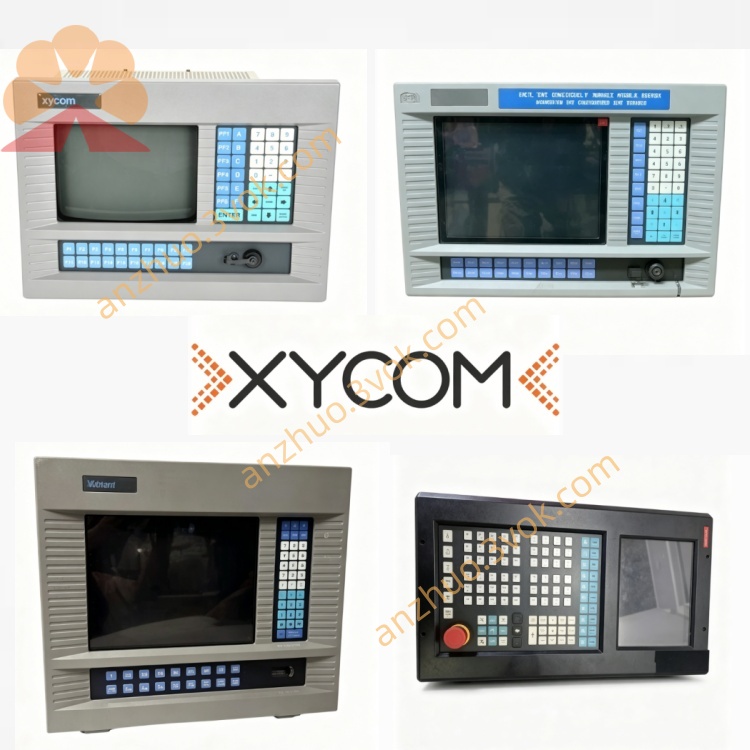
XYCOM 81600EA1804 Detailed Product Description
Description
XYCOM 81600EA1804 Detailed Product Description
I. Product Overview
XYCOM 81600EA1804 is a rugged embedded industrial CPU board card launched by XYCOM (now part of Artisan Technology Group). The "81600EA" in the model number represents the series code, while "1804" is the hardware version and configuration number. It is designed as a high-reliability, wide-temperature, and vibration-resistant industrial control core, targeting industrial automation, data acquisition, measurement and control systems, and embedded applications in harsh environments. It can function independently as a main control board or be integrated into industrial enclosures / display terminals, providing the ability for long-term unmanned operation with stable performance.
II. Hardware Architecture and Mechanical Characteristics
Board Type Specification: Industrial-grade standard embedded long card / ATX specification, multi-layer reinforced PCB design, onboard core chip, memory, storage, I/O controller, power management, hardware watchdog, and EMI filtering circuit; compact in size, suitable for 4U/6U industrial enclosures, VME enclosures, or custom embedded enclosures, with flexible installation.
Rugged Design: Full-board component reinforced welding + connector locking reinforcement, edge metal edge coating, vibration resistance, shock resistance, anti-gold finger oxidation; PCB uses high TG high-temperature resistant material, resistant to high and low temperatures, able to withstand thermal cycling, suitable for dusty, humid, and strong electromagnetic interference conditions.
Heat Dissipation and Installation: Supports screw fixation / rail installation; passive cooling design without fan, core area reserved for heat sink installation position, suitable for low-power long-term operation, avoiding dust accumulation causing faults, suitable for high-pollution industrial sites.
Status Indicators: Onboard power, operation, fault, and watchdog LED indicators, combined with power-on self-test (POST), can quickly locate CPU, memory, I/O, and bus faults, facilitating on-site maintenance and fault troubleshooting.
III. Core Processor and Memory Configuration
Main Processor: Equipped with a high-performance 32-bit industrial-grade microprocessor, with high frequency and fast computing speed, low power consumption design, supporting 7×24-hour continuous operation, balancing performance and energy consumption, suitable for industrial control, data processing, lightweight graphical interface, and complex control logic operations.
Memory: Onboard industrial-grade wide-temperature memory (standard 4GB, optional 8GB), supports parity check / EDC error correction, resistant to electromagnetic interference, temperature (-40°C to +85°C), meeting the requirements of multi-task operating systems, real-time data caching, and complex control program operation.
Storage Interfaces:
Standard mSATA/2.5-inch SATA interfaces, support industrial-grade SSD (32GB to 256GB), without mechanical moving parts, vibration resistance, high-temperature resistance, ensuring data security and system stability;
Reserved CompactFlash slot, supports large-capacity storage expansion and system image backup, suitable for power failure data protection and rapid system recovery scenarios.
BIOS and Firmware: Uses SPI Flash BIOS, supports Shadow RAM, hardware monitoring, remote wake-up, PXE network boot, can be upgraded firmware on-site, suitable for customized functional requirements and system optimization.
IV. I/O Interfaces and Communication Capabilities
Serial Interfaces: Onboard RS-232×2, RS-422/485×1 (with optical isolation), baud rate 50 to 115.2 kbps, supports Modbus RTU, PLC communication, serial port sensor connection, isolation design to resist surges and static electricity, suitable for strong interference industrial sites. Network interface: Integrated Gigabit Ethernet ×2 (RJ45, with isolation), supporting link aggregation, redundant network, PROFINET, EtherNet/IP and other industrial Ethernet protocols, ensuring high-speed data transmission and network reliability, suitable for industrial IoT gateways, SCADA systems and remote monitoring scenarios.
USB interface: USB 2.0 ×4, USB 3.0 ×1, supporting keyboards, mice, external hard drives, USB acquisition devices, touch screen controllers, with reinforced interface to prevent detachment, suitable for frequent insertion and removal in industrial sites and expansion of peripheral devices.
Video output: VGA ×1, HDMI ×1, LVDS ×1 (board-mounted pins), supporting dual display output, suitable for industrial monitors, touch screens, large-screen displays, with a maximum resolution of 1920×1080, meeting the requirements for local operation interfaces and remote monitoring displays.
Other I/O:
GPIO ×8 (programmable input/output), suitable for relay control, sensor signal acquisition, indicator light driving;
Audio interface: microphone input, speaker output, supporting voice alarm, on-site intercom;
RTC real-time clock: battery backup, maintaining date and time in case of power failure, ensuring accurate timestamps for event records and data logs.
Five. Electrical Characteristics and Environmental Specifications
Power supply: DC 12V/24V industrial standard power supply, wide voltage 9~36V, anti-reverse connection, overvoltage, overcurrent, surge protection; typical power consumption 15W, low power consumption design, low heat dissipation pressure, suitable for redundant power supply configuration and long-term stable operation.
Operating temperature: standard -10℃~+60℃; wide temperature version -40℃~+70℃, covering extremely cold and hot industrial sites, suitable for vehicle-mounted, military, outdoor equipment scenarios.
Storage temperature: -40℃~+85℃, no damage during long-term storage, able to withstand drastic temperature changes.
Humidity: 5%~95% RH (no condensation), able to withstand high humidity and condensation environments, suitable for damp workshops, ships, outdoor conditions.
Vibration / Shock: Compliant with MIL-STD-810 standard, vibration 5~2000Hz, 0.015" displacement, shock 10g, 11ms half-sine wave, suitable for high-vibration equipment such as machines, production lines, vehicles.
Electromagnetic Compatibility: Compliant with IEC 61000-6-2/4, CE, UL certification standards, strong resistance to static electricity, pulse groups, surges, radio frequency interference, suitable for strong electromagnetic interference sites such as motors, frequency converters, high-voltage equipment.
Six. Core Functions and Software Support
Operating system compatibility: native support for Windows 7/10 embedded, Windows XP, Linux (Debian/Ubuntu), VxWorks, QNX, suitable for mainstream industrial software, configuration software (WinCC, Intouch, Configuration Master) and real-time operating systems, mature development ecosystem, facilitating users to quickly deploy applications.
Hardware monitoring and protection:
Hardware watchdog (WDT): programmable timeout 1~255 seconds, system abnormality automatic reset, ensuring long-term stable operation;
Voltage / Temperature monitoring: real-time monitoring of core voltage, CPU / board card temperature, over-threshold automatic alarm / frequency reduction / shutdown, protecting hardware safety;
Power-on self-test (POST): automatic detection of CPU, memory, I/O, network upon startup, LED display results, quickly locating hardware faults.
Development support: provide original factory drivers (graphics card, network card, serial port, GPIO), SDK, API interfaces, C language development library, supporting users' secondary development of customized control logic, HMI interface, data acquisition programs, suitable for special industry requirements.
Seven. Typical Application Scenarios Industrial Automation Control: As the core control module of production lines and assembly lines, it drives I/O modules, PLCs, and sensors to achieve process parameter control, equipment status monitoring, fault alarms, and local operations.
Embedded Equipment Control: Adapted for embedded main control of specialized equipment such as machine tools, injection molding machines, packaging machines, textile machinery, and medical equipment, it features no fan, anti-vibration, and wide temperature operation, and integrates internal embedded control.
Data Acquisition and Monitoring (SCADA): As the on-site data acquisition terminal, it connects sensors, instruments, and PLCs to collect parameters such as temperature, pressure, flow, and rotational speed, stores locally and uploads to the upper system, supporting real-time curves, historical reports, and abnormal alarms.
Industrial Internet of Things (IIoT) Gateway: Equipped with the Linux system, integrating edge computing, protocol conversion (Modbus→MQTT/OPC-UA), data encryption, and point-to-point transmission, it connects to industrial cloud platforms to achieve remote monitoring, equipment operation management, and data analysis, and enables remote control, operation, and data recording within the vehicle.
Military / Vehicle / Rail Transportation: Adapted for harsh environments such as armored vehicles, trains, ships, and outdoor base stations, it features wide temperature, anti-vibration, and strong electromagnetic compatibility, serving as a vehicle control terminal, display control platform, and data recording device.
VIII. Product Core Advantages
Fully Reinforced and Wide Temperature Reliable Design: Industrial-grade PCB, reinforced welding, no fan cooling, wide temperature operation, anti-vibration and shock resistance, MTBF > 100,000 hours, suitable for high dust, high vibration, and wide temperature conditions, ensuring stable operation over the long term.
Rich Industrial I/O and Communication: Dual gigabit isolation network, multiple isolated serial ports, USB 3.0, dual display video, programmable GPIO, supports multiple protocol communication, seamlessly connects to PLCs, sensors, and upper systems, suitable for complex industrial networks.
Low Power Consumption and High Performance: Low power consumption and high-performance processor + passive cooling, overall power consumption <15W, balancing computing performance and energy consumption control, with low heat dissipation pressure and reduced maintenance costs.
Flexible Expansion and Customization: Supports memory/storage upgrade, interface expansion, BIOS customization, operating system adaptation, and can be customized for hardware configuration, software image, and pre-installed applications according to user requirements, suitable for special industry scenarios.
Long Lifecycle Support: XYCOM industrial-grade products have a long lifecycle (10-15 years), providing long-term spare parts supply, technical support, and maintenance services to ensure the long-term stable operation of industrial equipment and reduce upgrade and replacement costs.
Get a Quote