
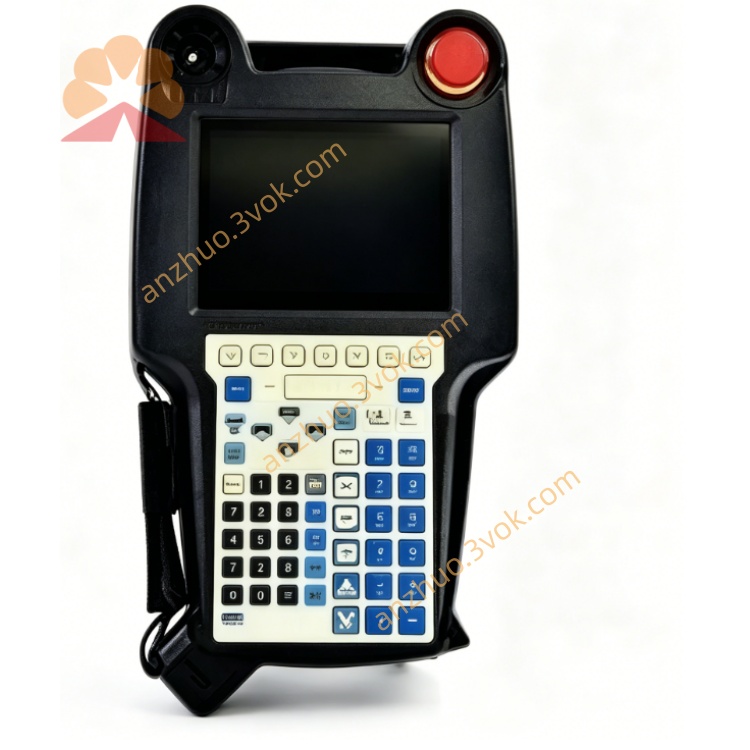
A06B-0158-B175#7008
Description
FANUC A06B-0158-B175#7008 AC Servo Motor Instruction Manual
2. Safety Precautions
2.1 Electrical Safety
High Voltage Warning: The motor and driver operate at high voltages (up to 400 V). Disconnect all power supplies before installation, wiring, or maintenance. Wait at least 10 minutes for capacitors to discharge before touching electrical components.
Grounding: Connect the motor’s ground terminal to a reliable earth ground (resistance ≤ 4 Ω) to prevent electric shock and electromagnetic interference.
Wiring Compliance: Use shielded cables for power and encoder wiring. Follow local electrical codes and FANUC wiring standards. Do not reverse power supply polarity.
2.2 Mechanical Safety
Lifting and Handling: The motor is heavy (85 kg). Use appropriate lifting equipment (e.g., hoists, cranes) with rated capacity. Avoid dropping or impacting the motor.
Installation: Mount the motor on a rigid, flat surface. Secure all mounting bolts to the specified torque (see Section 3.2). Do not apply excessive radial or axial loads to the shaft.
Rotating Parts: Keep hands, tools, and clothing away from the rotating shaft and cooling fan during operation. Install safety guards as required by local regulations.
2.3 Operational Safety
Overload Protection: Do not operate the motor beyond its rated torque, speed, or current. The driver’s overload protection will trigger if limits are exceeded, but prolonged overload may damage the motor.
Brake Usage: The holding brake is for static holding only, not for dynamic braking during operation. Do not use the brake to stop the motor while it is running.
Emergency Stop: Connect the motor to an emergency stop circuit. In case of abnormal operation (e.g., overheating, unusual noise, vibration), press the emergency stop button immediately and disconnect power.
3. Installation
3.1 Unpacking and Inspection
Unpack Carefully: Remove the motor from its packaging. Check for visible damage (e.g., dents, scratches, broken connectors) during transportation.
Verify Contents: Ensure the package includes the motor, a user manual, a warranty card, and optional accessories (e.g., mounting bolts, cable glands).
Check Model and Serial Number: Confirm that the motor model (A06B-0158-B175#7008) and serial number match the order documents.
Inspect Shaft and Encoder: Rotate the motor shaft manually to ensure smooth rotation without abnormal noise or resistance. Check the encoder connector for bent or damaged pins.
3.2 Mechanical Installation
Mounting Surface: Prepare a rigid, flat mounting surface with sufficient strength to support the motor and withstand operating vibrations. The surface should be clean and free of debris.
Motor Orientation: Install the motor in a horizontal or vertical orientation (vertical installation: shaft downward recommended). Ensure the cooling fan is not blocked and has adequate airflow (minimum 50 mm clearance around the fan).
Mounting Bolts: Use high-strength steel bolts (grade 12.9) of the specified size (M12 × 40 mm for flange mounting). Insert bolts through the motor’s mounting holes and tighten them evenly in a crisscross pattern to a torque of 65–70 N·m.
Shaft Coupling: Connect the motor shaft to the load (e.g., gearbox, ball screw) using a flexible coupling or direct connection. Align the shaft centers within 0.1 mm (radial) and 0.5° (angular) to avoid excessive vibration and bearing wear. Tighten the coupling bolts to the specified torque.
Brake Release: If the motor is equipped with a holding brake, ensure the brake is released (24 V DC applied) before rotating the shaft or connecting the load.
3.3 Electrical Installation
3.3.1 Power Wiring
Cable Selection: Use a 3-phase shielded power cable with a cross-sectional area of 6–10 mm² (copper) for the motor power connection. The cable must be rated for 600 V and 75°C.
Terminal Connection: Connect the 3-phase power cables (U, V, W) to the motor’s power terminals (U, V, W). Connect the ground wire (PE) to the motor’s ground terminal. Tighten all terminal screws to a torque of 2.5–3.0 N·m.
Cable Routing: Route power cables separately from encoder cables (minimum 300 mm distance) to avoid electromagnetic interference. Use cable glands to seal the motor’s cable entry points and maintain IP67 protection.
3.3.2 Encoder Wiring
Cable Selection: Use a FANUC-specified shielded encoder cable (e.g., A02B-0120-K301) with 4–6 twisted pairs. The cable must be rated for 300 V and 75°C.
Connector Connection: Insert the encoder cable’s connector into the motor’s encoder connector (located on the rear of the motor). Tighten the connector’s locking ring securely to ensure a reliable connection and maintain IP67 protection.
Cable Routing: Route encoder cables in a straight line with minimal bends (minimum bend radius: 10 × cable diameter). Avoid routing cables near high-voltage power lines or electromagnetic sources (e.g., transformers, motors).
3.3.3 Brake Wiring
Cable Selection: Use a 2-core shielded cable with a cross-sectional area of 1.5–2.5 mm² (copper) for the brake connection.
Terminal Connection: Connect the brake cables to the motor’s brake terminals (BRK+, BRK–). The brake operates on 24 V DC ±10%. Ensure the polarity is correct (BRK+ to positive, BRK– to negative). Tighten terminal screws to 1.5–2.0 N·m.
Brake Control: Connect the brake to a 24 V DC power supply controlled by the servo driver. The brake should be released (power applied) when the motor is enabled and engaged (power removed) when the motor is disabled or in case of power failure.
4. Commissioning
4.1 Pre-Operation Check
Mechanical Check: Verify that all mounting bolts and coupling bolts are tightened to the specified torque. Ensure the motor shaft rotates freely without binding.
Electrical Check: Confirm that all power, encoder, and brake connections are correct and secure. Check that the ground connection is reliable. Measure the insulation resistance between the motor windings and the motor frame using a megohmmeter (minimum 1 MΩ at 500 V DC).
Driver Configuration: Set up the FANUC servo driver (e.g., αi-B series) according to the motor’s specifications. Configure parameters such as motor type, encoder resolution, rated current, and brake control. Refer to the driver’s user manual for detailed configuration steps.
Safety Check: Ensure all safety guards are installed correctly. Test the emergency stop circuit to confirm it functions properly.
4.2 Initial Operation
Power On: Turn on the servo driver and the motor’s cooling fan. Check for any alarm codes on the driver’s display (e.g., overvoltage, undervoltage, encoder error).
Jog Operation: Enable the motor and perform a jog operation at low speed (100–500 min⁻¹) in both clockwise and counterclockwise directions. Check for smooth rotation, abnormal noise, or vibration.
Encoder Check: Verify the encoder’s position feedback on the driver’s display. Ensure the position count increases/decreases correctly with the motor’s rotation.
Brake Test: Test the holding brake by disabling the motor (removing power from the brake). Apply a small load to the motor shaft and confirm the brake holds the shaft securely. Re-enable the motor (apply power to the brake) and confirm the brake releases smoothly.
4.3 Load Test
Gradual Load Application: Connect the motor to the load and apply a gradual load from 0% to 100% of the motor’s rated torque. Operate the motor at rated speed (2,000 min⁻¹) for 30 minutes.
Monitor Parameters: During the load test, monitor the motor’s current, temperature, and vibration using the servo driver’s monitoring functions. The motor’s temperature should not exceed 155°C (insulation class F). The vibration level should be within 4.5 mm/s (RMS).
Check for Abnormalities: Listen for abnormal noise (e.g., grinding, squealing) and check for unusual vibration or overheating. If any abnormalities are detected, stop the motor immediately and troubleshoot (see Section 6).
5. Operation
5.1 Normal Operation
Speed Range: Operate the motor within the speed range of 0 to 2,500 min⁻¹. Avoid continuous operation at speeds above 2,000 min⁻¹ for extended periods.
Torque Range: Operate the motor within the torque range of 0 to 40 N·m (continuous). Short-term overload (up to 120 N·m) is allowed for a maximum of 30 seconds.
Cooling: Ensure the cooling fan is operating correctly during motor operation. Keep the fan’s air intake and exhaust clear of debris. Clean the fan filter regularly (see Section 5.2).
Brake Usage: Use the holding brake only for static holding when the motor is disabled. Do not use the brake to stop the motor during operation.
5.2 Maintenance
5.2.1 Regular Maintenance (Monthly)
Visual Inspection: Check the motor for visible damage (e.g., dents, scratches, oil leaks). Inspect the cooling fan for debris buildup.
Cleaning: Clean the motor’s exterior with a dry cloth. Remove debris from the cooling fan and air vents using a soft brush or compressed air (low pressure: ≤ 0.5 MPa).
Connection Check: Verify that all power, encoder, and brake connections are tight and secure. Check for loose terminal screws or damaged cables.
Vibration and Noise Check: Listen for abnormal noise and check for unusual vibration during motor operation.
5.2.2 Periodic Maintenance (Every 6 Months)
Shaft Bearing Lubrication: The motor’s shaft bearings are pre-lubricated and sealed for life. No additional lubrication is required under normal operating conditions. If the motor is operated in harsh environments (e.g., high temperature, heavy dust), consult FANUC for lubrication recommendations.
Encoder Inspection: Check the encoder’s connector and cable for damage. Verify the encoder’s position feedback accuracy using the servo driver’s monitoring functions.
Brake Inspection: Test the holding brake’s performance. Measure the brake’s holding torque (minimum 40 N·m). Check the brake’s coil resistance (approximately 100 Ω at 24 V DC).
Insulation Resistance Test: Measure the insulation resistance between the motor windings and the motor frame using a megohmmeter (minimum 1 MΩ at 500 V DC).
5.2.3 Long-Term Storage
Clean the Motor: Clean the motor’s exterior and remove any debris.
Disconnect Cables: Disconnect all power, encoder, and brake cables from the motor.
Protect the Shaft: Apply a thin layer of rust inhibitor to the motor shaft. Cover the shaft with a protective cap to prevent damage.
Store in a Dry Place: Store the motor in a clean, dry environment with a temperature range of -20°C to +60°C and a relative humidity of ≤ 60%. Avoid direct sunlight and exposure to corrosive gases.
Periodic Rotation: Rotate the motor shaft manually by 90° every 3 months to prevent bearing seizure and shaft rusting.
6. Troubleshooting
6.1 Common Alarms and Causes
Overcurrent Alarm (SV0600):
Causes: Motor winding short circuit, ground fault, encoder failure, driver malfunction, excessive load.
Troubleshooting: Check motor windings for short circuit or ground fault (measure insulation resistance). Inspect encoder cable and connector for damage. Reduce the load. Test the servo driver.
Overvoltage Alarm:
Causes: Power supply voltage too high, regenerative energy from the load, driver malfunction.
Troubleshooting: Check the power supply voltage. Install a regenerative resistor if necessary. Test the servo driver.
Undervoltage Alarm:
Causes: Power supply voltage too low, power supply failure, loose power connection.
Troubleshooting: Check the power supply voltage. Verify all power connections are tight and secure.
Encoder Error Alarm:
Causes: Encoder cable damage, loose encoder connector, encoder failure, electromagnetic interference.
Troubleshooting: Inspect encoder cable for damage. Tighten the encoder connector. Check for electromagnetic interference (separate encoder cables from power cables). Test the encoder.
Overheating Alarm:
Causes: Excessive load, blocked cooling fan, high ambient temperature, motor winding failure.
Troubleshooting: Reduce the load. Clean the cooling fan and air vents. Improve ventilation. Check motor windings for failure.
Brake Error Alarm:
Causes: Brake coil failure, loose brake connection, insufficient brake voltage.
Troubleshooting: Check brake coil resistance. Verify brake connections are tight and secure. Check brake voltage (24 V DC ±10%).
6.2 Mechanical Issues
Abnormal Noise:
Causes: Worn shaft bearings, misalignment between motor and load, damaged coupling, foreign matter inside the motor.
Troubleshooting: Replace shaft bearings. Realign motor and load. Replace damaged coupling. Clean the motor’s interior.
Excessive Vibration:
Causes: Misalignment between motor and load, unbalanced load, loose mounting bolts, worn shaft bearings.
Troubleshooting: Realign motor and load. Balance the load. Tighten mounting bolts. Replace shaft bearings.
Shaft Binding:
Causes: Foreign matter inside the motor, damaged shaft bearings, misalignment between motor and load.
Troubleshooting: Clean the motor’s interior. Replace shaft bearings. Realign motor and load.
7. Warranty
Damage caused by improper installation, operation, or maintenance.
Damage caused by overload, overheating, or electrical faults not related to the motor’s design or manufacturing.
Damage caused by accidents, natural disasters, or foreign matter intrusion.
Normal wear and tear of consumable parts (e.g., bearings, seals).
8. Contact Information
Website: www.fanuc.com
Global Support Hotline: +81-55-975-2111
Regional Offices: Refer to the FANUC website for contact information of local offices worldwide.
Get a Quote