
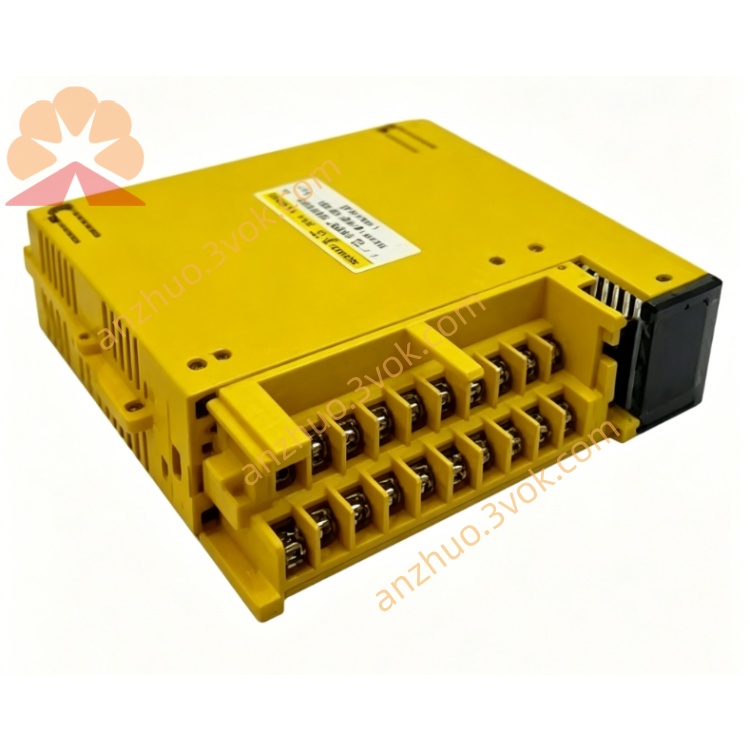
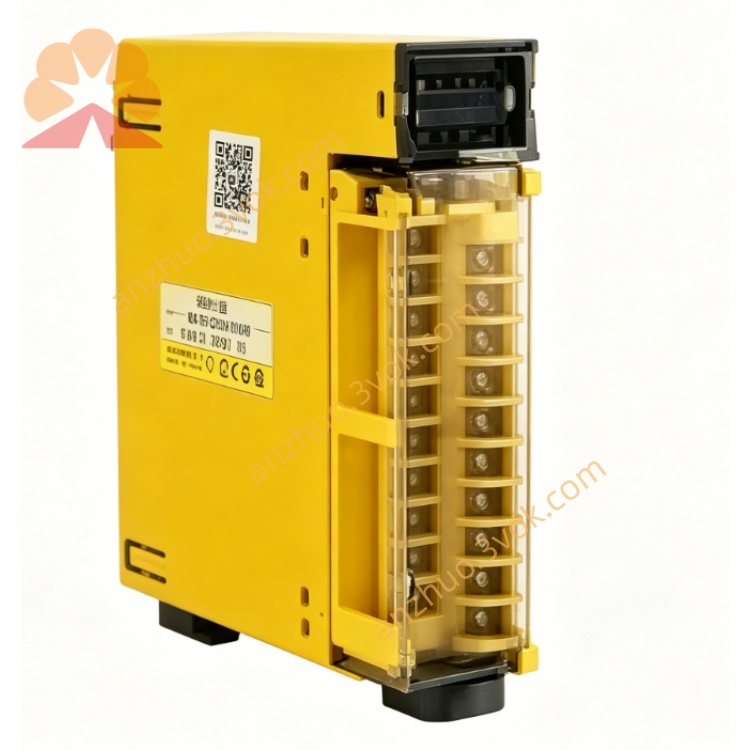
A06B-0115-B075#0008
Description
2. Electrical Specifications
Rated Input Voltage: 200–240 VAC, 3-phase, 50/60 Hz
Rated Output Power: 0.5 kW
Rated Torque: 1.2 N·m
Rated Speed: 4000 RPM
Max Continuous Speed: 4000 RPM
Rated Current: 2.6 A
Peak Torque: 3.6 N·m (short duration)
Insulation Class: F (155°C)
Winding Type: Three-phase brushless permanent magnet winding
3. Mechanical Specifications
Rotor Characteristic: Low inertia design, fast acceleration/deceleration, excellent dynamic response
Bearing Structure: Sealed bearing with lifetime pre-lubrication
Noise Level: ≤ 70 dB(A) at rated speed
Shaft Structure: Straight shaft without keyway, integrated high-performance shaft seal
Rotation Direction: Standard counterclockwise (viewed from shaft end)
Mechanical Structure: Compact, fully enclosed, high-strength industrial design
4. Environmental Operating Conditions
Operating Ambient Temperature: 0°C to +40°C
Storage Temperature: -20°C to +60°C
Relative Humidity: 40%–80% RH, non-condensing
Installation Altitude: ≤ 1000 m above sea level
Vibration Resistance: 0.5g (10–100 Hz frequency range)
Application Environment: IP65-rated for coolant splash, oil mist, and dust; not suitable for long-term immersion or strong corrosive gas environments
5. Key Features
Low Inertia Rotor: Enables rapid start-stop and high dynamic positioning for high-speed cyclic motion.
High-Resolution Encoder: βi64B encoder (64,000 ppr) delivers ultra-precise speed/position control.
IP65 Protection: Effectively isolates dust, metal chips, oil mist, and coolant splash.
Compact & Lightweight: 1.4 kg body saves installation space and simplifies integration.
Straight Shaft (No Keyway): Ideal for interference-fit couplings and hollow-shaft transmissions.
Brushless & Maintenance-Free: No carbon brush wear; sealed bearings require no lubrication.
Fanless Cooling: Fewer failure points, low noise, and reduced contamination risk.
#0008 Configuration: Optimized for small CNC machines and FANUC LR Mate 200iB robots.
6. Application Scope
Small/medium CNC milling, drilling, tapping, and engraving machine feed axes
FANUC LR Mate 200iB robotic arms (joint axes)
Industrial automation high-speed handling manipulators and sorting mechanisms
Precision rotary platforms, indexing axes, and light-load transmission equipment
Automation machinery with coolant splash and dusty environments
High-speed, high-precision, fast-response light-load motion control applications
7. Installation Guidelines
Mount on a rigid, flat base to avoid resonance and mechanical deformation.
Align motor and load shafts precisely to reduce vibration and premature bearing wear.
Use dedicated shielded power/encoder cables; separate power and signal wiring to suppress EMI.
Reserve sufficient natural heat dissipation space; do not cover the motor housing.
Avoid strong impact/dropping during handling to protect the encoder and bearings.
Do not damage shaft seals or housing edges during installation (preserves IP65).
8. Maintenance Instructions
Regularly inspect for abnormal noise, vibration, or overheating.
Keep the motor surface clean of metal dust, coolant, and oil contamination.
Sealed bearings use lifetime lubrication—no regular oiling required under normal conditions.
Periodically check encoder cable aging, damage, and connector tightness.
Prohibit long-term overload or frequent rapid reversing beyond rated parameters.
Regularly verify housing and shaft seal integrity to maintain IP65 protection.
9. Safety Precautions
Cut off all 200–240V power before installation/wiring/maintenance; wait ≥15 minutes for capacitor discharge to prevent electric shock.
Do not touch rotating shafts or moving parts during operation.
This model has no holding brake—do not use for vertical/suspended loads without additional mechanical locking.
Do not disassemble the motor/encoder; unauthorized disassembly damages precision parts and voids the warranty.
Do not use in conductive dust, heavy condensation, or strong corrosive environments without extra protection.
10. Troubleshooting
Motor fails to start: Check 3-phase power, wiring, servo alarms, and enable signals.
Abnormal noise/vibration: Check mounting rigidity, coupling alignment, bearing wear, or mechanical jamming.
Overheating: Inspect for long-term overload, high ambient temperature, or blocked heat dissipation.
Positioning deviation: Check encoder cable damage, loose connectors, servo parameter mismatch, or mechanical backlash.
Unstable speed: Verify voltage fluctuations, load changes, or encoder signal interference.
Dust/coolant ingress: Check for seal damage; replace damaged parts and improve environmental protection.
Get a Quote