
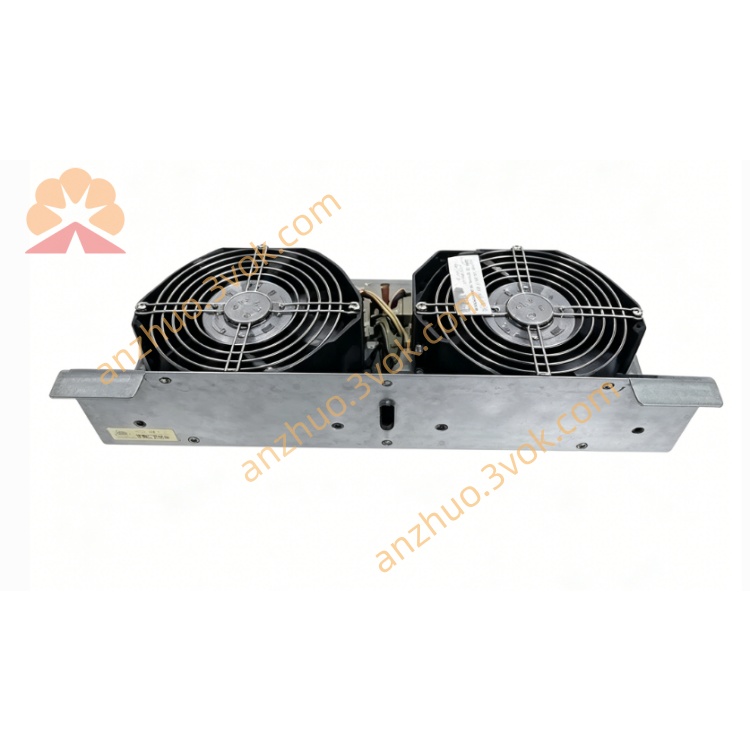
A06B-0078-B503
Description
2. Electrical Specifications
Rated Voltage: 200–240 VAC, 3-phase, 50/60 Hz
Rated Output Power: 3.0 kW
Rated Torque: 28.6 N·m
Rated Speed: 2000 RPM
Maximum Speed: 3000 RPM
Rated Current: 11.5 A
Rated Frequency: 133 Hz
Insulation Class: F
Winding: 3-phase permanent magnet brushless
3. Mechanical Specifications
Rotor: Medium-high inertia
Bearings: Sealed, lifetime pre-lubricated
Noise: ≤75 dB(A) at rated load
Shaft Runout: High precision (standard tolerance)
Rotation: CCW from shaft end (standard)
Structure: Fully enclosed, fanless
4. Environmental Conditions
Operating Temperature: 0°C to +40°C
Storage Temperature: -20°C to +60°C
Humidity: 40%–80% RH, non-condensing
Altitude: ≤1000 m
Vibration: 0.5g (10 Hz–100 Hz)
Environment: Indoor industrial; not for explosive/corrosive atmospheres without protection
5. Key Features
Medium-high inertia rotor ensures rigidity and stable heavy-load operation.
βiA 128K encoder provides high-precision position/speed closed-loop control.
IP65 protection resists dust, oil mist, and coolant in workshop environments.
Straight keyed shaft enables easy installation and reliable torque transmission.
Brushless design offers low noise, long service life, and maintenance-free operation.
Fanless natural cooling reduces failure rates and enhances operational reliability.
Compact high power density facilitates integration into various machinery.
6. Applications
CNC lathes, milling machines, machining centers (heavy-feed axes)
Industrial robots (heavy-duty joint drives)
Heavy positioning mechanisms in automation lines
Packaging, printing, rubber, and plastic machinery
Horizontal axes and non-suspended load servo systems
7. Installation Guidelines
Mount on a rigid, flat base to avoid resonance and mechanical stress.
Align motor and load shafts precisely to prevent vibration and bearing wear.
Use dedicated shielded power/encoder cables; separate power and signal wiring.
Reserve clearance for heat dissipation; do not block cooling surfaces.
Avoid heavy impact or dropping during handling and installation.
8. Maintenance Instructions
Inspect regularly for abnormal noise, vibration, or overheating.
Keep the motor surface clean of dust, chips, and oil.
Sealed bearings are lifetime-lubricated; no regular greasing needed.
Check encoder cable integrity and connector tightness periodically.
Avoid prolonged overload or excessive start-stop cycles.
9. Safety Precautions
Disconnect power before installation/wiring/maintenance; wait 15 minutes for capacitor discharge.
Do not touch rotating shafts or moving parts during operation.
No holding brake—do not use on vertical axes without additional mechanical locking.
Do not disassemble the motor or encoder; unauthorized disassembly voids warranty.
Avoid use in conductive dust, heavy condensation, or corrosive environments without protection.
10. Troubleshooting
Motor won’t start: Check 3-phase power, wiring, servo amplifier alarms, and enable signals.
Abnormal noise/vibration: Check mounting rigidity, coupling alignment, bearings, and load jamming.
Overheating: Check for overload, high ambient temperature, or poor ventilation.
Position deviation: Check encoder cables, connectors, servo parameters, and mechanical backlash.
Unstable speed: Check voltage fluctuations, load changes, or encoder signal interference.
Get a Quote