
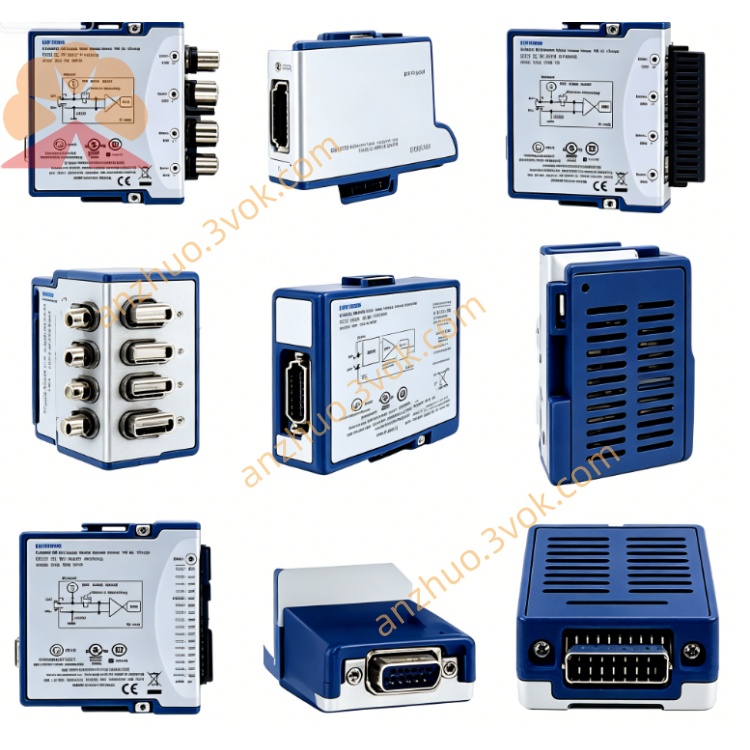
PCI-8336
Description
I. Core Positioning and Model Information
Model: PCI‑8336 (MXI‑4 Fiber)
Part Number: 778958‑01
Type: PCI 32bit → MXI‑4 Fiber Serial Bridging Card
Purpose: Long-distance / Strong electromagnetic environment for PC controlling PXI chassis, multi-chassis synchronization
Status: EOL; Replacement: PXIe‑8381 (PCIe MXI‑4 Fiber)
II. Key Specifications of PCI-8336 (Fiber Version)
1. Physical and Bus
Bus: 32-bit PCI / PCI-X 33 MHz (Does not support PCIe)
Board Type: Full-length PCI card (15.5 × 22.0 cm)
Power Consumption: +3.3 V/0.25 A; +5 V/1.5 A
Size: 10.7 × 17.5 cm (4.4 × 6.9 in)
2. MXI-4 Fiber Communication (Different from 8331 Core)
Link: MXI-4 Fiber, 4 Gbps Serial (1.5 Gbit/s Effective)
Bandwidth: Peak 400 MB/s, Continuous >200 MB/s
Distance:
Multimode Fiber (OM1/OM2): Maximum 200 m
Single-mode Fiber (OS2): Farthest 10 km (Requires Single-mode Optical Module)
Interface: SC Duplex Fiber Port (Primary) + HSSDC Copper Cable Port (Compatible with MXI-3/4)
Interference Resistance: Photoelectric Isolation, Strong EMI Environment (Power / Rail Transit / Industrial Furnace) Preferred
3. System Capabilities
Topology: Star / Daisy Chain, Up to 255 Bus Nodes
Transparent Bridge: Remote PXI Devices are Directly Enumerated as Local PCI Devices on PC
Driver: NI-MXI-4; Supports Windows 2000/XP/7 (32/64)
Software Compatibility: LabVIEW, NI-DAQ, VISA, CVI
III. PCI-8331 (Copper Cable) vs PCI-8336 (Fiber) Table
Parameters:
PCI-8331 (copper cable) - PCI-8336 (fiber optic)
Transmission medium: HSSDC copper cable, SC optical fiber (multi-mode / single-mode)
Maximum distance: 10 m - 200 m (multi-mode) / 10 km (single-mode)
Bandwidth: Peak 132 MB/s - Peak 400 MB/s
Interference resistance: General - Extremely strong (optical isolation)
Board type: Half-length PCI, Full-length PCI
Typical scenarios: Short-distance, low-cost in the data center; Long-distance, strong electromagnetic interference, industrial site
Four. Hardware Installation (Same as 8331, emphasizing the key points of fiber optic)
Power off and disconnect power supply, prevent static electricity, insert an idle 32-bit PCI/PCI-X slot (strictly prohibit PCIe).
Fix the full-length card guard plate to ensure the heat dissipation space.
Fiber optic connection (critical!) :
Use SC/SC multimode fiber (OM2 recommended), HOST ↔ TARGET transceivers must not be reversed
One end connects to PCI-8336 (PC), the other end connects to PXI-8336 (slot 1 of PXI chassis)
Copper cable compatibility: can be connected to HSSDC copper cable (within 10 m, downgrade to 8331 performance)
Power on, the system automatically recognizes the new hardware.
VII. Software Drivers and System Support
Driver: NI-MXI-4 (v4.7 final stable version)
Supported systems:
✅ Windows XP/7 (32/64) (the most stable)
❌ Windows 10/11 (no official driver, unstable compatibility mode)
Installation: Driver CD / Official website old version library → Check MXI-4 Core + LabVIEW VIs → Restart
Verification: Device Manager → National Instruments → PCI-8336 MXI-4 Fiber Controller
VIII. Typical Application Scenarios
Long-distance distributed testing: PC remotely controls PXI chassis 200 m away
Strong electromagnetic environment: substations, rail transit, high-frequency furnaces, welding equipment area
Multi-chassis cascading: cross-room PXI system clock / trigger synchronization (daisy chain each segment 200 m)
High-bandwidth data acquisition: high-speed images, radar, vibration signals long-distance transmission
IX. Common Problems and Prohibited Items
❌ PCIe slot unavailable: only supports old-style PCI/PCI-X
⚠️ Fiber transceiver direction: reverse insertion will result in no Link, strictly follow the label TX/RX
⚠️ Fiber bending radius: ≥ 30 mm, avoid excessive bending to cause attenuation
⚠️ Win10/11 drivers: no official support, new projects must select PXIe-8381
IX. Alternative Models (PCIe Upgrade)
PXIe-8381: PCIe MXI-4 fiber, 4 GB/s bandwidth, multimode 200 m / single-mode 10 km
PXIe-8380: PCIe MXI-4 copper cable, 10 m, compatible with MXI-3/4
Get a Quote